Recent Posts





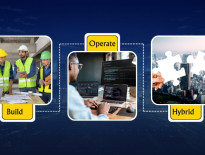
The changing environment of global business expansion is causing companies to look to models that can provide cost efficiency as well as more control, scalability, and innovation. The Build-Operate-Transfer (BOT) model has become a strategic substitute for the conventional Offshore Development Center (ODC) that offers a solution for businesses to create a solid presence in new markets and retain long-term ownership and control over their operations. BOT Model The Build-Operate-Transfer (BOT) model is a business model that enables global companies to create a presence in a new market with minimal risks but still enjoy the long-term ownership benefits. In contrast to the traditional forms of outsourcing where operations are not much controlled by the vendor, BOT provides a gradual transition of operations control and operational capabilities to the client.
Build Phase During the initial phase, the Inductus GCC will install the whole infrastructure, hire and train the staff and develop the operational processes that will be based on the strategic goals of the client. Operate Phase When the arrangement is in place, operations are handled under the management of the BOT partner within a specified duration of time. At this stage the client keeps a check on performance and the partner on operational excellence, cost optimisation and compliance. Transfer Phase The final process involves the gradual process of transfer of ownership of the control and operational responsibility to the client. The center is at this point mature and is fully functional and is able to operate independently.
The BOT model has a number of economic advantages:
Inductus GCC has a robust BOT model which is tailored to the customised needs of the companies wishing to have a presence in India. Their approach includes: With the capabilities of Inductus GCC, companies will be able to experience a smooth movement from outsourced operations to full ownership and operation centers that helps to stimulate long-term value and innovation.
Build- Operate-Transfer model offers a tactical direction to those companies that want to expand their operations with the global frontier but remain in charge and promote innovation. Businesses that adopt the BOT model instead of the traditional ODCs will be able to enter and operate in the new markets with confidence and speed. The BOT model has become an innovative concept of sustainable growth and operational excellence as the global business environment keeps transforming. To put it briefly, the BOT model turns outsourcing into the process of creating capabilities and a strategic, long-term journey, as the firms begin with risk-sharing and slowly, as time progresses, gain the complete command and ownership of the business. Under the BOT model of Inductus GCC, businesses do not simply open an offshore center, but rather, a long-term source of innovation, efficiency, and sustainable global growth.
A GCC is an offshore facility of a multinational company that undertakes niche roles such as research and development, information technology service and strategic management. It is a government program that gives the women entrepreneurs up to 1 crore in bank loans to fund greenfield projects. Personal responsibilities and unconscious bias are the factors that lead to their mid-career attrition and slow them down in their careers. They introduce new ideas, understanding, and team-oriented leadership that speeds up the advancement of such areas as AI and cybersecurity. By 2030, women are expected to take up 25-30 per cent of GCC leadership positions, which will be paramount to the growth of the Indian market. Aditi, with a strong background in forensic science and biotechnology, brings an innovative scientific perspective to her work. Her expertise spans research, analytics, and strategic advisory in consulting and GCC environments. She has published numerous research papers and articles. A versatile writer in both technical and creative domains, Aditi excels at translating complex subjects into compelling insights. Which she aligns seamlessly with consulting, advisory domain, and GCC operations. Her ability to bridge science, business, and storytelling positions her as a strategic thinker who can drive data-informed decision-making.
The BOT model is divided into three decisive stages

BOT vs. ODC
Dimension
Offshore Development Center (ODC)
Build-Operate-Transfer (BOT)
Ownership
The owner of the center and assets remains with the vendor.
The client becomes a gradual proprietor following maturity.
Control
Client has inadequate control of operations and strategic decisions.
Client acquires complete control of operations and management after transfer.
Risk
Great dependence on vendor performance and market knowledge.
Post-transfer risk is minimal; build and operate risks are shared.
Scalability
The growth is based on the capacity and willingness of the vendors.
In line with client growth strategies and strategic map.
Cultural Alignment
Depends on the practices of the vendors; integration issues are typical.
During the operation phase, cultural alignment is incorporated to facilitate a smooth transition.
IP & Security
The vendor has partial control over intellectual property and data.
Client is granted full IP rights and ownership of data.
Economic Advantages
Inductus BOT Model: Specialised for Strategic Expansion.
Conclusion

frequently asked questions (FAQs)
1.What is a Global Capability Centre (GCC)?
2.What is the Stand-Up India scheme?
3.What are the challenges associated with women in tech?
4.What is the effect of women leaders in the innovation process?
5.What does the future of women in the leadership of the GCC hold?

Aditi




Error: Contact form not found. Error: Contact form not found.Subscribe to our Newsletter
Subscribe to our Newsletter
Insights / News
Quick Links