Recent Posts





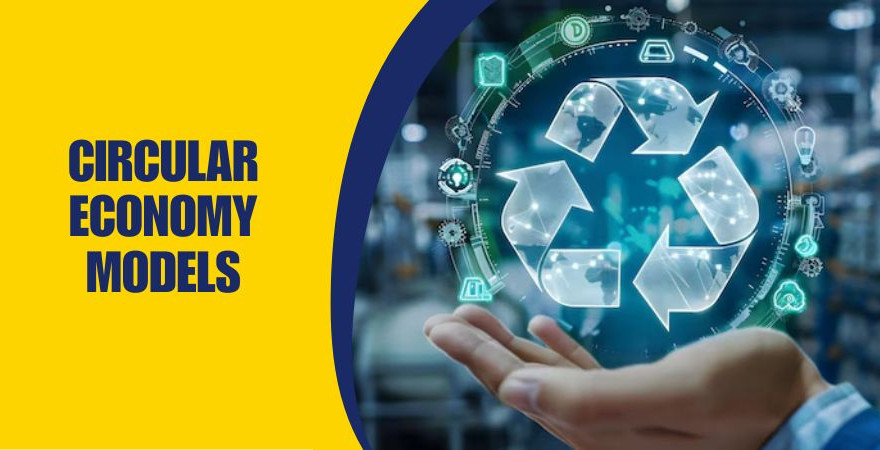
One of the major changes is already underway: multinational corporate executives are transferring funds and expertise to Global Capability Centres (GCCs), which are built for resilience, sustainability, and new revenue streams in addition to cost reduction. There are already more than 1,900 GCCs in India, and these centres are quickly assuming roles of engineering, R&D and sustainability on behalf of their parent organisations. This is the agglomeration of talent that makes GCCs a natural hub to operationalise circular economy models in manufacturing networks. The market of the global circular economy is developing rapidly. Corporate and regulatory pressure (such as the reinforced waste and EPR regulation by the EU) is increasing, moving towards the use of the strategies of a circle in manufacturing and supply chains. GCCs are proving to be the rational centers to develop, pilot and scale circular solutions among regions for multinational manufacturers that expand internationally.
In other words, the goal of circular economy models is to ensure that materials and products remain useful over a longer period, derive better value out of the resources and restore natural systems rather than destroying them. To produce GCCs with long-traditional engineering, product lifecycle activities and digital activities. The circular opportunity becomes tactical and strategic: cut the costs of inputs, make supply resilience and provide new services based on services (remanufacturing, refurbishment and take-back services). The result is economical and environmental.
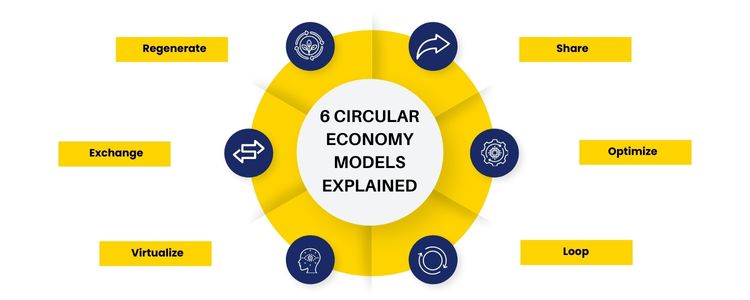
The following are the real-world models that GCC manufacturing can consider following and the abilities they need to establish. All models are naturally mapped to the prevalent GCC functions: product engineering, data analytics, supply chain orchestration, and digital platforms.
Circle strategies generate quantifiable economic results. Less utilisation of raw materials and energy directly reduces the cost of goods sold; reuse and remanufacture generate new pools of margins; design-for-reuse reduces the lead times and enhances supplier resilience. Industry studies indicate that waste stream conversion to feedstock with optimisation yields can provide cost reductions in the order of digits in selected product lines and that circular services tend to fetch greater customer lifetime value. By centralising the scale through the deployment of such capabilities, GCCs can implement similar innovations across their manufacturing footprints at a lower incremental cost.
These levers transform strategy into cost savings, readiness to comply and speedy time-to-market of sustainable products.
Efforts by regulators, like the recent increased waste directive and textile EPR schedules by the EU are compelling companies to internalise the lifecycle expenses and to take responsibility for the disposal of the products. GCCs developed to create compliance-as-a-service and supplier carbon/packaging tracking will transform regulatory requirements into competitive advantages as opposed to becoming cost centres. The increasing scope of GCCs (many of them are already heads of the global ESG and analytics functionality) makes them the key to this compliance-to-innovation shift.
The top manufacturing GCCs will have explicit circular mandates in the next five years: the ownership of product circularity KPIs, operating reverse-logistics platforms, and providing cross-border remanufacturing playbooks. Those organisations that put GCCs in charge of such roles will minimise the total lifecycle expenditure, minimise the effect of commodity shocks and access differentiated sustainable products that satisfy ever-tougher buyer and regulatory requirements.
The models of the circular economy are no longer an optional design activity anymore. They are a crucial strategic instrument that a manufacturer plans to achieve when they seek international business expansion. Global Capability Centres, with a high concentration of engineering talent and digital capability, are the only ones able to transform the circular ambition into tangible economic outcomes. The question that manufacturing leaders must address is not whether or not to go circular, but how quickly their GCCs can be organised to transform circular models into global benefit repetition.
Hyderabad, Bangalore and Pune have become significant pharma innovation centres with global delivery centres of major biotechnological and pharmaceutical firms such as Novartis, Pfizer, AstraZeneca and GSK. They offer an economic benefit of calculation, a variety of scientific and technical human resources, and speedy time-to-market. On average, businesses reduce between 25-40 percent of the operational costs and increase the rate of innovation. The next-generation operations of Pharma GCC focus on advanced molecular modelling, AI/ML-based drug discovery, cloud supercomputing, and data integration platforms, as well as quantum-ready simulations. Pharma GCCs use AI to screen molecules, predict the efficacy of drugs, optimise clinical trials and aid in making data-driven decisions, resulting in smarter, faster and safer drug pipelines. Pharma GCCs will be global innovation ecosystems that are a combination of computational chemistry, generative AI, and quantum computing. They will turn into the hubs linking data science, discovery and regulatory intelligence in the global arena. Aditi, with a strong background in forensic science and biotechnology, brings an innovative scientific perspective to her work. Her expertise spans research, analytics, and strategic advisory in consulting and GCC environments. She has published numerous research papers and articles. A versatile writer in both technical and creative domains, Aditi excels at translating complex subjects into compelling insights. Which she aligns seamlessly with consulting, advisory domain, and GCC operations. Her ability to bridge science, business, and storytelling positions her as a strategic thinker who can drive data-informed decision-making.
The Meaning of Circular in Reference to Making GCCs.
Six Circular Models
Economic Advantages
The Circular Transformative Potential Of GCCs
Round vs. GCC Capability Goal
Circular Goal
What it delivers
GCC capability required
Waste reduction
Reduced cost of inputs, increased output.
Online twins, procedure analytics.
Product life extension
New service sales, reduced replacement expenditure.
Predictive maintenance, service platforms
Resource efficiency
Reduced energy/water footprint.
Energy dashboards, IoT integration
Material recirculation
Reduced virgin material spend
Reverse logistics, material tracking.
Green innovation
Product differentiation, access to the market.
R&D, rapid prototyping, LCA
Market Signals and Regulatory Tailwinds
Future Outlook
Conclusion
frequently asked questions (FAQs)
1.Who are the Pharma GCC development leaders in India?
2.Which economic benefits do Pharma GCCs have?
3.Which technologies are influencing Pharma GCC operations nowadays?
4.What is the role of AI in Pharma GCC processes?
5.How will Pharma GCCs look in five years to come?

Aditi








Error: Contact form not found. Error: Contact form not found.Subscribe to our Newsletter
Subscribe to our Newsletter
Insights / News
Quick Links