Recent Posts







For decades, European Union (EU) enterprises viewed India through the narrow lens of cost arbitrage. However, as we move through 2026, in lieu of a mother of all trade deals being signed, the narrative and bottlenecks have pivoted drastically. With India now hosting over 1,800 active Global Capability Centers (GCCs), contributing roughly $68 billion (1.8%) to the national GDP, the challenge for EU leadership is no longer if they should expand in India, whether there is proof of concept, whether there is but where and how to balance the tightening strings of compliance with the hunger for elite talent. I see three critical pillars defining the next wave of EU-India GCC strategy: Hyper-local Talent Density, Fractionalized Cost Structures, and Convergent Compliance (GDPR meets DPDP). Choosing a location is no longer just about real estate; it is about ecosystem alignment. Rising attrition (averaging 15.2% in metros) and Grade-A office rentals exceeding ₹120/sq. ft. in Bengaluru have pushed EU firms toward “Hub-and-Spoke” models. While talent in India remains up to 60% less expensive than in the EU/US for top tech roles, the “hidden” costs of 2026 are nuanced. The real saving in 2026 is in the retention. The ” reverse migration” trend post-2024 means talent in Tier-2 cities is more stable. EU firms are finding that a 200-member team in a Tier-2 city can save €1.5M – €2M annually in attrition-related overheads alone. For EU companies, data sovereignty is non-negotiable. The announcement of India’s Digital Personal Data Protection (DPDP) Act has created a regulatory mirror to the EU’s GDPR.
To lead in the 2026 landscape, EU enterprises must pivot from being “tenants” to “ecosystem owners.” The Indian GCC is no longer a peripheral experiment; it is the “Engineering Brain” of the modern European enterprise. Those who balance the triad of Location, Talent, and Compliance will not just save costs; they will pragmatically innovate at scale.
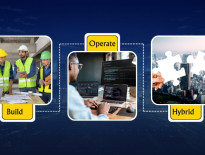
The GCC BOT model is a phased approach where a partner builds and operates a GCC before transferring full ownership to the enterprise once maturity criteria are met. It progresses through build, operate, and transfer phases with defined governance, allowing enterprises to assume ownership gradually. BOT offers a transitional ownership path, while captive GCCs require full ownership and responsibility from inception. Hybrid models suit organizations seeking flexibility, combining partner-led execution with selective internal control. Operational stability, governance maturity, compliance readiness, and leadership capability are key transfer thresholds. With multifaceted experience in Legal, Advisory, and GCCs, Yashasvi weaves law, business growth, and innovation. He leads a cross-functional team across legal, marketing, and IT to drive compliance and engagement. His interests span Law, M&A, and GCC operations, with 15+ research features in Forbes, ET, and Fortune. A skilled negotiator, he moderates webinars and contributes to policy forums.
The Tier-1 Powerhouses (Innovation & Scale)
The Tier-2 “Smart Cost” Frontier
Cost Component
Tier-1 Metro (e.g., Bengaluru)
Tier-2 Hub (e.g., Indore/Kochi)
Grade A Rentals
₹80 – ₹130 per sq. ft.
₹35 – ₹55 per sq. ft.
Software Engineer (Mid)
₹18L – ₹28L ($21k – $33k)
₹12L – ₹18L ($14k – $21k)
Attrition Rate
15% – 20%
8% – 10%
Operational TCO
Baseline
10% – 35% Lower
Key Compliance Mandates for 2026:
Strategic Recommendations for EU C-Suites

frequently asked questions (FAQs)
1.What is the GCC BOT model?
2.How does Build Operate Transfer work for GCCs?
3.BOT vs captive GCC: what is the difference?
4.Is a hybrid GCC model suitable for enterprises?
5.What factors determine BOT transfer readiness?

Yashasvi Rathore







Error: Contact form not found. Error: Contact form not found.Subscribe to our Newsletter
Subscribe to our Newsletter
Insights / News
Quick Links