Recent Posts






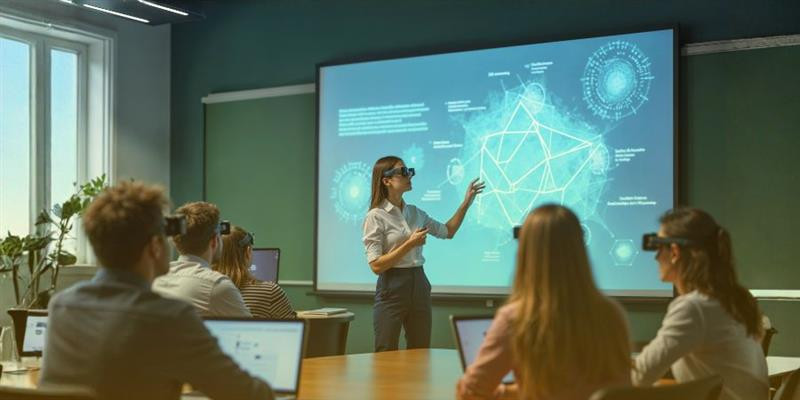
When a classroom in Madrid, a learner in Mysore, and an AI model in Bangalore come together in real time, learning becomes truly individualised rather than one-size-fits-all. Global Capability Centres (GCCs) of EdTech, which are Global Learning Labs where AI-bound educational products are developed, tested, and scaled to millions of learners worldwide, are establishing this connection.
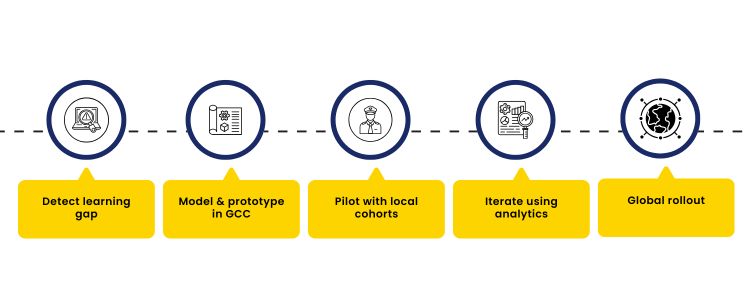
The education-technology market worldwide is growing at an extremely high rate; the industry analysts are estimating the market to be in the hundreds of billions by the next five years. This is accompanied by a boom in the number of Indian GCCs: India now boasts more than 1,900 GCCs, which are becoming the owners of product R&D and AI capabilities of international companies. Simultaneously, the pool of AI talent in India has reached four lakh, which forms a profound source of EdTech innovation. These are the market-scale forces coupled with GCC growth and concentrated AI talent forces that position India as a natural Global Technology Center with regard to next-gen learning. A learning scientist identifies the low engagement of Grade 8 students in algebra at an EdTech GCC in Bengaluru. The team designs a customised learning journey, implements an AI tutor in different languages and saves weeks of time-to-mastery on impacted groups in just a couple of days. The difference between a support centre and a Global Learning Lab is that mobile, cross-border cycle of design and deployment detection.
The 3 strategic reasons for EdTech companies to establish GCCs are GCCs become product centres with pedagogy, data privacy workflows, and compliance for the different markets instead of delivery engines. Who Is The Global Learning Lab Builder? All these work together in sprints to transform classroom indicators into product characteristics. AI-First Features of GCCs
GCCs reduce the unit economics of R&D and product operations: the companies announce significant infrastructure, staffing efficiencies, and local ecosystems, such as cloud vendors, skilling partners and co-innovation labs, which compound the indirect economic effect. In addition to direct cost savings, GCCs increase speed to market and lower the localisation costs through centralisation of language and curriculum engineering. These direct and multiplier benefits are verified by industry reports over the last few years in the regions where GCCs scale. Future Prospect It is anticipated that between 2025 and 2030, GCCs will advance into product ownership, develop end-to-end AI curricula, implement multilingual learning twins (computerised versions of student learning), and operate compliance sandboxes that streamline FERPA, GDPR, and national laws. The growing presence of India in the GCC and its rising AI capabilities will make it one of the global technology centers of EdTech R&D and deployment. The recent funding increases and the re-awakening of interest in AI-driven learning platforms highlight this trend.
Global Learning Labs located in the EdTech GCCs are not an optional centre of excellence; they are the strategic powerhouse behind any organisation that aspires to expand AI-powered education in an ethical and efficient way. When your organisation is creating the future generation of learning products, a Global Capability Center model might be a sensible choice to concentrate AI skills, speed up localisation, and gain an economic benefit.
A GCC is an offshore facility of a multinational company that undertakes niche roles such as research and development, information technology service and strategic management. It is a government program that gives the women entrepreneurs up to 1 crore in bank loans to fund greenfield projects. Personal responsibilities and unconscious bias are the factors that lead to their mid-career attrition and slow them down in their careers. They introduce new ideas, understanding, and team-oriented leadership that speeds up the advancement of such areas as AI and cybersecurity. By 2030, women are expected to take up 25-30 per cent of GCC leadership positions, which will be paramount to the growth of the Indian market. Aditi, with a strong background in forensic science and biotechnology, brings an innovative scientific perspective to her work. Her expertise spans research, analytics, and strategic advisory in consulting and GCC environments. She has published numerous research papers and articles. A versatile writer in both technical and creative domains, Aditi excels at translating complex subjects into compelling insights. Which she aligns seamlessly with consulting, advisory domain, and GCC operations. Her ability to bridge science, business, and storytelling positions her as a strategic thinker who can drive data-informed decision-making.
Introduction
The Importance of GCCs in AI-based Education in EdTech Companies.
Next-Gen Learning Streams
Innovation stream
What an EdTech GCC builds
Global impact
Adaptive Learning AI
Engine prediction & personalisation engines in students.
Faster mastery, higher retention
Generative Content
Auto-localized lesson creators
Rapid curriculum scale
AR/VR Labs
Educational realistic simulations.
Better concept retention
Assessment Intelligence
Fraud analytics + AI proctoring.
Trusted certification at scale
Learning Data Cloud
Cross-country insights & dashboards
Policy and product decisions
Economic Benefits
Conclusion
frequently asked questions (FAQs)
1.What is a Global Capability Centre (GCC)?
2.What is the Stand-Up India scheme?
3.What are the challenges associated with women in tech?
4.What is the effect of women leaders in the innovation process?
5.What does the future of women in the leadership of the GCC hold?

Aditi







Error: Contact form not found. Error: Contact form not found.Subscribe to our Newsletter
Subscribe to our Newsletter