Recent Posts






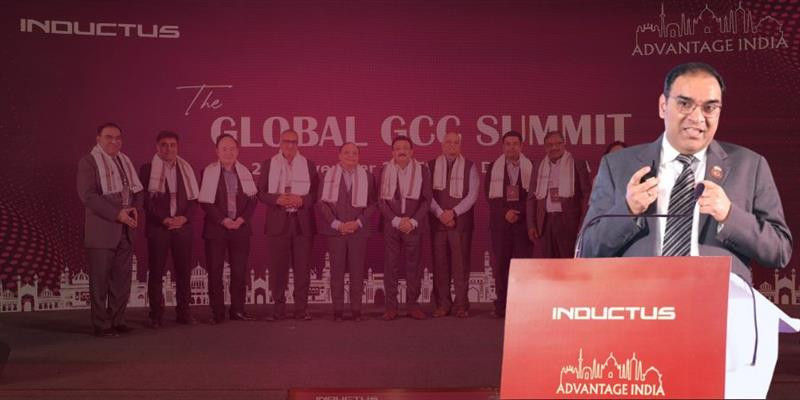
The Global Capability Center (GCC) phenomenon in India is shifting from a cost-arbitrage model to a driver of strategic R&D and innovation. This maturation presents a critical opportunity for European financial institutions (FIs) seeking resilient, scalable operations. However, a significant institutional hesitation persists, driven by profound regulatory scrutiny and unique European governance requirements. During the recent “The Global GCC Summit’ in India, Mr Anjani Ladia, Chairman of the Board of the ICAI Luxembourg and Head of Business Control Operations at IQEQ Luxembourg, a finance professional with over 25 years of global governance, risk, and control experience, addressed this challenge directly. His insights framed the core issue: Why aren’t more European financial firms setting up GCCs in India? The answer lies not in doubts about Indian capability but in the stringent, risk-averse framework of European regulation concerning delegation and oversight. The following analysis distils Mr Ladia’s complex perspectives into an actionable blueprint for business leaders looking to foster high-trust, compliant collaboration between the India GCC sector and the European financial ecosystem.
European business expansion often stalls at the first hurdle: recognising that “Europe” is not a single market for regulatory compliance. Mr Ladia underscored the concept of the “Seven Europes” Paradox: a complex overlay of geographical, political, economic, and legal entities. As he notes, “There are seven Europes within one Europe,” requiring differentiated compliance strategies. For governance and risk officers, this fragmentation is key. This reality of regulatory fragmentation exponentially increases the scope of audits, legal costs, and the complexity of governance documentation.
At the heart of Europe’s financial network is Luxembourg, which acts as a critical gateway for accessing the fund industry. Luxembourg is Europe’s largest investment fund domicile and the world’s second largest, trailing only the United States. It manages total assets under management, reaching approximately €5.9 trillion. The country serves as the domicile for funds managed by 98 out of the top 100 European asset managers. Given this financial gravity, satisfying the rigorous delegation and oversight standards set by the Luxembourg regulator (CSSF) becomes the de facto benchmark for any GCC targeting the wider European fund industry.
The European mindset toward outsourcing is fundamentally driven by risk aversion and fiduciary duty, placing the emphasis squarely on the EU principal retaining control. This manifests in specific, burdensome regulatory mandates that create a trust deficit for non-EU providers. Exit Strategy and Oversight The European Banking Authority (EBA) Guidelines on outsourcing arrangements are pivotal for credit institutions and investment firms. The guidelines enforce the principle that firms must be able to exit any outsourcing arrangement without unduly disrupting business activities or jeopardising regulatory compliance. This explains the European prioritisation, noted by Mr Ladia, of “how to shut it down” before setting up operations. EBA guidelines require the Exit Strategy to be rigorously documented, maintained, and, crucially, tested. Testing must analyse the potential costs, impacts, resources, and timing required to migrate the service back in-house or to an alternative provider. This necessity for building and testing robust, redundant systems forces GCCs to shift their focus from minimising Total Cost of Ownership (TCO) to managing the Total Cost of Compliance. Substance and Intra-Group Preference Under directives like the Alternative Investment Fund Managers Directive (AIFMD), European supervisory authorities (ESMA) heavily scrutinise delegation arrangements to ensure the authorised EU management company maintains sufficient substance and does not become a “letterbox entity”. These supervisory concerns lead European firms to exhibit a strong preference for captive (intra-group) GCCs over third-party outsourcing, especially for critical functions like portfolio or risk management. The remaining member states must be formally notified before any critical work is sent outside of Europe, ensuring explicit oversight.
Beyond regulatory mandates, practical barriers amplify risk for European firms considering India. Fiscal and Labor Issues The threat of triggering a Permanent Establishment (PE) status for the European principal is a key fiscal deterrent. If a foreign entity is deemed to have a PE in India, it could face up to 40% tax on profits attributable to that PE. The highest risk often stems from poorly structured secondment arrangements or blurred lines of responsibility. To mitigate this risk, meticulous legal and operational structuring is mandatory, including: The transactions between the foreign enterprise and its Indian GCC must follow the arm’s length principle, making Transfer Pricing an ongoing source of concern. Operational Resilience and Attrition Operational viability hinges on addressing talent volatility. While general market voluntary attrition rates have stabilised (e.g., around 12.6% to 16.9% in 2024), specialised financial GCCs can still experience severe volatility. Mr Ladia highlighted this risk, stating that in his experience, “My own GCC… has 30% attrition.” High attrition in critical, specialised financial roles directly undermines the operational resilience and continuity required by regulators. DORA: The Digital Resilience Imperative The Digital Operational Resilience Act (DORA), which goes into effect in January 2025, requires all EU financial entities and their third-party ICT providers to use a unified framework for managing Information and Communication Technology (ICT) risk. Indian GCCs providing technology, data analytics, or cloud services to EU FIs are often classified as Critical Third-Party ICT Providers and fall directly under DORA’s scope. Failure to comply carries severe financial consequences: financial entities and non-critical providers face fines up to 2% of their total annual worldwide turnover. This high liability standard effectively requires GCCs to shift their focus toward stringent technical and governance requirements. Bridging the Data Divide: GDPR and DPDP The most significant operational challenge lies in data governance. The GDPR maintains extraterritorial scope, meaning it applies to data of EU residents regardless of where it is processed. India’s DPDP Act adds new strict controls on cross-border data transfers. The compliance standard must always default to the stricter GDPR requirements. Critically, since India does not have an EU adequacy decision, any transfer of personal data requires a rigorous Transfer Impact Assessment (T-IA), a requirement stemming from the Schrems II ruling. The T-IA mandates that GCCs evaluate the data access powers of Indian state authorities and the related judicial remedies, demonstrating that these safeguards are “essentially equivalent” to those under EU law.
Unlocking the next phase of India-Europe collaboration requires a shift from capability selling to governance assurance. Indian providers must adopt a meticulous, auditable blueprint designed to satisfy the concerns of European Chief Risk Officers (CROs). The Path Forward for Indian GCCs requires addressing:
The exhaustive nature of this compliance checklist suggests that the most strategic opportunity lies not just with the largest institutions but with the numerous mid-tier European firms. These firms often lack the internal resources and budget to independently manage the high complexity and cost associated with EBA, DORA, and PE risk. A pre-vetted, compliant Indian GCC that adopts this blueprint can lower the friction for this untapped segment, offering them a ready-made “trust solution”.
This is where institutional liaisons become critical. Professional bodies, such as the ICAI Luxembourg chapter, act as vital strategic connectors. They are made up of professionals with multiple global qualifications, such as Mr. Ladia, who provide the institutional credibility, localised interpretation, and technical competence required to align policies and accelerate market entry. The success of this professional liaison demonstrates how institutional trust and professional accountability support cross-border collaboration.
Hyderabad, Bangalore and Pune have become significant pharma innovation centres with global delivery centres of major biotechnological and pharmaceutical firms such as Novartis, Pfizer, AstraZeneca and GSK. They offer an economic benefit of calculation, a variety of scientific and technical human resources, and speedy time-to-market. On average, businesses reduce between 25-40 percent of the operational costs and increase the rate of innovation. The next-generation operations of Pharma GCC focus on advanced molecular modelling, AI/ML-based drug discovery, cloud supercomputing, and data integration platforms, as well as quantum-ready simulations. Pharma GCCs use AI to screen molecules, predict the efficacy of drugs, optimise clinical trials and aid in making data-driven decisions, resulting in smarter, faster and safer drug pipelines. Pharma GCCs will be global innovation ecosystems that are a combination of computational chemistry, generative AI, and quantum computing. They will turn into the hubs linking data science, discovery and regulatory intelligence in the global arena. Aditi, with a strong background in forensic science and biotechnology, brings an innovative scientific perspective to her work. Her expertise spans research, analytics, and strategic advisory in consulting and GCC environments. She has published numerous research papers and articles. A versatile writer in both technical and creative domains, Aditi excels at translating complex subjects into compelling insights. Which she aligns seamlessly with consulting, advisory domain, and GCC operations. Her ability to bridge science, business, and storytelling positions her as a strategic thinker who can drive data-informed decision-making.
Demystifying 'Europe' for Business
Luxembourg: The Strategic Gateway
The Regulatory Trust Deficit
The Practical Barriers to Entry

Building the Bridge: A Checklist for Trust
Conclusion

frequently asked questions (FAQs)
1.Who are the Pharma GCC development leaders in India?
2.Which economic benefits do Pharma GCCs have?
3.Which technologies are influencing Pharma GCC operations nowadays?
4.What is the role of AI in Pharma GCC processes?
5.How will Pharma GCCs look in five years to come?

Aditi










Error: Contact form not found. Error: Contact form not found.Subscribe to our Newsletter
Subscribe to our Newsletter