Recent Posts






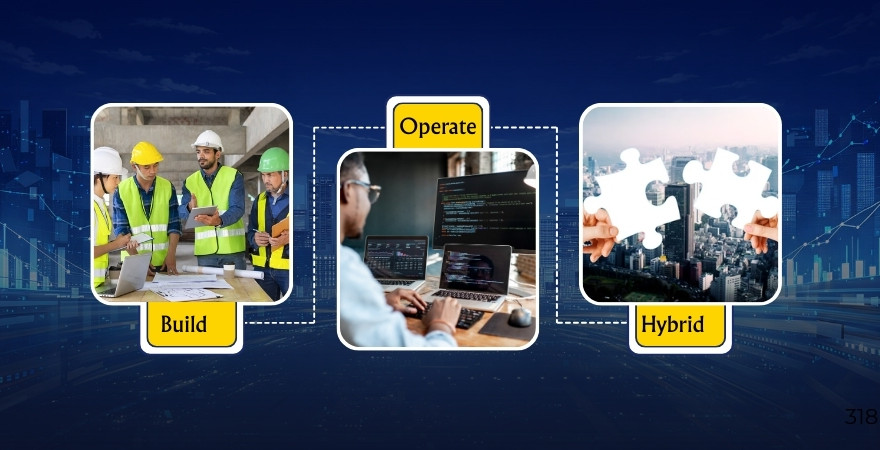
Selecting a Global Capability Center operating model in 2026 is no longer an execution detail delegated to operations teams. It is a leadership decision with long-term implications on cost discipline, governance resilience, and ownership control. Enterprises that misjudge this choice often face delayed scale-up, regulatory friction, and fragile delivery structures that are difficult to unwind. As offshore strategies mature, models like GCC Build Operate Transfer are increasingly evaluated alongside full ownership and hybrid structures as part of board-level expansion planning.
Global enterprises are expanding offshore under far more scrutiny than in previous cycles. Regulatory oversight has tightened, talent markets have become less predictable, and geopolitical volatility has raised the cost of structural missteps. In this environment, the chosen GCC operating model directly influences competitive resilience and long-term margin protection. Several structural pressures are shaping GCC model decisions in 2026. Enterprises are expected to deliver rapid speed-to-market without tolerance for early instability, even as cost predictability becomes harder to maintain due to wage inflation and rising compliance overheads. Governance expectations have intensified, with increased statutory accountability across jurisdictions placing greater responsibility on leadership teams. At the same time, talent scalability risks—particularly in high-demand digital, engineering, and analytics roles—have become a central constraint in offshore expansion planning. As peers adopt more structured models such as GCC BOT frameworks or phased hybrid delivery, organizations relying on ad-hoc setups risk falling behind in operational maturity and ownership readiness.
The GCC build-operate-transfer (BOT) model addresses a specific leadership challenge: how to enter India quickly while retaining a clear path to full ownership. It is typically chosen by enterprises seeking control without absorbing early-stage execution risk. From a strategic standpoint, BOT creates a structured ownership progression that aligns with enterprise readiness. It allows leadership teams to validate talent, governance, and delivery capability before assuming full responsibility. At its core, the BOT model is designed around phased ownership progression aligned to predefined maturity thresholds. Risk is shared during the initial setup and stabilization period, allowing enterprises to limit early-stage exposure while validating operational effectiveness. This structure creates a deliberate balance between rapid market entry and long-term ownership control, ensuring that speed does not come at the expense of governance or strategic intent. When executed correctly, the GCC transfer model supports offshore delivery ambitions while preserving the option to internalize operations once scale and confidence are achieved.
In execution, Build Operate Transfer GCC unfolds across clearly governed phases, each with defined accountability and transition readiness. Successful BOT GCC implementation depends less on speed and more on disciplined governance across phases.
The GCC BOT model is effective when aligned with enterprise intent and organizational maturity. It is not a default solution, but a structured pathway with clear trade-offs. From an advantage perspective, the BOT model enables faster entry into India without requiring full internal setup at inception. It significantly reduces early-stage regulatory and hiring risk while providing access to local execution expertise during the stabilization period. In the initial years, this structure often leads to improved GCC operational efficiency and greater cost predictability as delivery and governance mature. At the same time, the BOT model introduces limitations that require careful consideration. Weak governance structures can create dependency risks on the operating partner, while the transfer phase itself adds complexity across legal, HR, and intellectual property dimensions. The operate phase also demands higher governance rigor than many enterprises anticipate, particularly as the organization prepares for ownership transition. Leadership teams benefit most when BOT is treated as a temporary ownership structure, not a permanent outsourcing arrangement.
The build-own-operate model offers complete ownership from day one. Enterprises adopting this route prioritize control over speed and are prepared to absorb early execution complexity. The build-own-operate model is defined by full IP and data ownership from inception, complete internal governance and management accountability, and direct responsibility for regulatory compliance and employment obligations. This structure provides maximum control but places the full burden of execution, risk, and compliance on the enterprise from day one. While this model enables deep cultural integration and long-term cost optimization, it places significant demands on leadership bandwidth, local expertise, and compliance readiness.
Build-own-operate is a readiness-based choice rather than an aspirational one. It suits organizations with demonstrated offshore operating maturity. Build-own-operate typically makes strategic sense for enterprises with strong familiarity with the India business environment, existing internal operating scale across geographies, and a long-term investment horizon without immediate delivery pressure. These readiness signals indicate an ability to absorb early execution complexity without compromising governance or delivery stability. For enterprises lacking these signals, premature full ownership often leads to avoidable execution strain.
Hybrid GCC models combine elements of BOT and build-own structures to manage uncertainty. They are increasingly adopted by organizations seeking phased expansion without committing to a single ownership extreme. In practice, hybrid delivery models: This flexibility allows enterprises to adapt as market conditions evolve, making hybrid and shared services models particularly relevant for 2026 expansion strategies.
Build Operate Transfer (BOT) Model The Build Operate Transfer (BOT) model is suited for enterprises seeking rapid market entry into India while limiting early-stage operational and compliance risk. Speed to market is high, as the setup, hiring, and initial operations are led by an experienced local partner. Initial risk exposure is shared during the build and operate phases, reducing upfront uncertainty for the enterprise. Ownership is transferred progressively over a defined period, allowing the enterprise to gain control in a structured manner. Governance complexity is moderate but requires a well-defined BOT governance framework to manage decision rights, performance oversight, and the eventual transfer. Compliance responsibility is initially managed by the partner and transitions to the enterprise post-transfer. Talent acquisition is largely partner-supported, enabling faster scaling and higher cost predictability in the early stages. The transfer phase is mandatory and structured. This model is best suited for enterprises entering India for the first time with a clear long-term ownership intent. Build-Own-Operate Model The Build-Own-Operate model is designed for enterprises that prioritize full ownership and control from day one. Speed to market is the slowest among the three models, as the entire setup—entity formation, compliance, hiring, and operations—is handled internally. All upfront investment and execution risk are fully borne by the enterprise. Ownership is immediate and complete, providing maximum strategic and operational control. Governance complexity is high, as all governance, compliance, and operational responsibilities sit entirely within the enterprise. Compliance management is fully enterprise-led. Talent acquisition is also managed internally, which allows for strong cultural alignment but typically results in slower initial scalability. Cost predictability can be variable in the early stages due to setup and ramp-up expenses. There is no transfer phase, as the GCC is fully owned and operated from inception. This model is best suited for mature offshore operators with established global delivery and governance capabilities. Hybrid GCC Model The Hybrid GCC model offers a balanced and flexible approach, combining elements of partner support and enterprise control. Speed to market is moderate, achieved through phased execution where select functions or stages are partner-enabled while others remain enterprise-controlled. Initial risk exposure is selectively shared, allowing enterprises to manage risk without committing fully upfront. Ownership is partial or phased, giving enterprises flexibility to increase control over time. Governance complexity is moderate, supported by flexible governance structures that can evolve as the GCC scales. Compliance responsibility is either shared or segmented, depending on the operational scope and maturity of the center. Talent acquisition follows a mixed responsibility model, blending partner-supported hiring with internal recruitment. Cost predictability is moderate, balancing control with flexibility. Transfer is optional, depending on how ownership and control are structured over time. This model is best suited for enterprises seeking scalability, risk optimization, and strategic flexibility in their GCC expansion. CXOs often evaluate GCC operating models using a trade-off framework rather than a binary choice. Across key decision dimensions, BOT and hybrid models generally outperform build-own structures on speed to market, particularly in early stages. BOT offers stronger cost predictability initially, while build-own models tend to stabilize costs later as scale matures. In terms of control and governance, build-own provides maximum autonomy, hybrid models balance control and flexibility, and BOT transitions ownership progressively. Compliance readiness is typically stronger under BOT in the early phases due to reduced enterprise exposure, while scalability is best supported by BOT and hybrid models through phased expansion.
Operating model selection must align with enterprise strategy rather than short-term delivery pressure. Misalignment often becomes visible only after scale. CXOs should evaluate GCC operating models based on the business objectives driving offshore expansion, the organization’s tolerance for regulatory and talent-related risk, and the operating complexity the enterprise is prepared to manage internally. Prior exposure to the India market is also a critical factor, as it influences governance readiness, compliance confidence, and leadership bandwidth. Alignment across these dimensions reduces the likelihood of costly structural corrections later. Strategic alignment across these factors reduces the likelihood of costly structural corrections later.
Most GCC failures stem from structural misalignment rather than execution gaps. Early decisions tend to lock enterprises into suboptimal paths. Common mistakes include over-prioritizing speed at the expense of governance discipline, underestimating statutory and compliance obligations, and selecting partners without clearly defined GCC BOT governance frameworks. Enterprises also frequently enter BOT arrangements without adequate transfer readiness, creating friction during ownership transition. As competitors adopt more disciplined models, these missteps increasingly translate into lost momentum and strategic drag. As competitors adopt more disciplined models, these missteps increasingly translate into lost momentum and strategic drag.
The GCC operating model chosen today shapes cost structures, ownership clarity, and resilience for years. It determines how quickly enterprises can adapt to regulatory shifts, talent cycles, and market volatility. Leadership teams that treat this as a strategic architecture decision—rather than a delivery shortcut—retain optionality and long-term control as their India presence matures.
Enterprises that delay or misalign their GCC model decisions often discover constraints only after capital, talent, and credibility are committed. A structured advisory discussion helps surface blind spots before they become irreversible. Engage through a focused conversation to: Reach out at consult@inductusgcc.com to explore a model aligned with your enterprise trajectory.
The GCC BOT model is a phased approach where a partner builds and operates a GCC before transferring full ownership to the enterprise once maturity criteria are met. It progresses through build, operate, and transfer phases with defined governance, allowing enterprises to assume ownership gradually. BOT offers a transitional ownership path, while captive GCCs require full ownership and responsibility from inception. Hybrid models suit organizations seeking flexibility, combining partner-led execution with selective internal control. Operational stability, governance maturity, compliance readiness, and leadership capability are key transfer thresholds. With multifaceted experience in Legal, Advisory, and GCCs, Yashasvi weaves law, business growth, and innovation. He leads a cross-functional team across legal, marketing, and IT to drive compliance and engagement. His interests span Law, M&A, and GCC operations, with 15+ research features in Forbes, ET, and Fortune. A skilled negotiator, he moderates webinars and contributes to policy forums.
Why GCC Operating Models Matter More Than Ever in 2026
Understanding the Build Operate Transfer (BOT) Model for GCCs
How the BOT Model Works in Practice
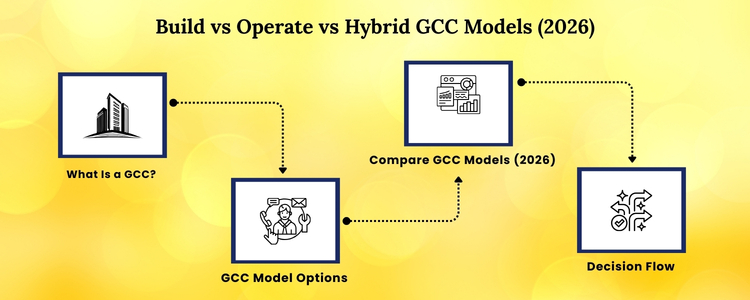
Key Advantages and Limitations of the BOT Model
Build-Own-Operate-Full Control, Full Responsibility
When Build-Own-Operate Makes Strategic Sense
Hybrid and Shared Services Models: The Middle Path
Comparing GCC Operating Models: BOT vs Build-Own vs Hybrid
Key Factors CXOs Should Evaluate Before Choosing a GCC Model
Common Mistakes Companies Make While Selecting a GCC Model
Choosing the Right GCC Model Is a Strategic Decision, Not an Operational One
Discuss Your GCC Model Strategy with an Expert
frequently asked questions (FAQs)
1.What is the GCC BOT model?
2.How does Build Operate Transfer work for GCCs?
3.BOT vs captive GCC: what is the difference?
4.Is a hybrid GCC model suitable for enterprises?
5.What factors determine BOT transfer readiness?

Yashasvi Rathore







Error: Contact form not found. Error: Contact form not found.Subscribe to our Newsletter
Subscribe to our Newsletter