Recent Posts






Consider a defence Global Capability Centre (GCC) in Bengaluru that is developing avionics subsystems for a US prime: an uncontrolled file share, a mis-tagged dataset, or even a poorly scoped contractor can result in export investigations, contract suspension, and years of remediation. This has become a business-critical risk: India has exported a record 23,625.92 crore of defence equipment in FY 2024-25, which is an indication of an increasing influence of Indian suppliers on international or global defence supply chains and an increased exposure to export control measures like ITAR and EAR. With the captive delivery centers and defence captive centers assuming more valuable R&D and systems engineering, compliance with ITAR is no longer a box to be checked; it is a strategic imperative. There are more than 1,900 GCCs in India, and the captive ecosystem in India is fast transitioning its focus from transactional work to mission-critical engineering and security services. This renders defence GCCs strategic points in defence supply chain security and the economics of defence innovation.
ITAR (International Traffic in Arms Regulations) limits transferring defence articles, technical data and services to foreign persons without a licence; the EAR (Export Administration Regulations) applies to the dual-use technologies. Civil penalties may be imposed on violations, including the consent agreements and reputational damage by the DDTC of the U.S. State Department. In captive centers dealing with this type of classified or regulated workload, the regulation boundary moves into hiring and cloud architecture, vendor choice, and day-to-day cooperation.
GCCs already make a substantial contribution to the growth of India. In addition to exports, the economic contribution of captive centers is also increasing. According to the most recent industry estimates, GCCs’ direct output is growing in billions of dollars and is expected to grow significantly by 2030 as centres scale up high-value work. This provides primes with an economic incentive to host sensitive engineering work in India under controlled conditions. The transition into high-value defence business presents the opportunity and responsibility of innovative export control systems.
The DDTC civil power regimes and settlement are the main means of non-compliance, and regulators demand visible controls and recovery. Companies need to integrate legal services, export-control staff, architectural engineers and GCC consultants to develop defence-in-depth programmes. Contextual access control and automated data-loss detection are now standard technologies.
By investing in a resilient ITAR compliance and defence supply chain security, defence captive centers will open the door to long-term commercial benefits: preferential contracting by Western primes and the capacity to host end-to-end product engineering, as well as enhanced positioning within the global defence ecosystem. Simulation, avionics, electronic warfare, and secure software delivery are the areas where compliant centres will take on the work with the largest margin as defence exports and value creation in the GCC both assume an upward trend.
ITAR and export control management in defence captive centers can no longer be considered an implementation afterthought but rather the high-security requirement which keeps markets open, maintains the country’s national security interests and facilitates innovation. Organisations that integrate stringent governance, technology stack separation, labour controls and ongoing surveillance shall elude punitive action; not only that, but they shall also garner the confidence needed to spearhead defence supply chain modernisation within the next decade.
Hyderabad, Bangalore and Pune have become significant pharma innovation centres with global delivery centres of major biotechnological and pharmaceutical firms such as Novartis, Pfizer, AstraZeneca and GSK. They offer an economic benefit of calculation, a variety of scientific and technical human resources, and speedy time-to-market. On average, businesses reduce between 25-40 percent of the operational costs and increase the rate of innovation. The next-generation operations of Pharma GCC focus on advanced molecular modelling, AI/ML-based drug discovery, cloud supercomputing, and data integration platforms, as well as quantum-ready simulations. Pharma GCCs use AI to screen molecules, predict the efficacy of drugs, optimise clinical trials and aid in making data-driven decisions, resulting in smarter, faster and safer drug pipelines. Pharma GCCs will be global innovation ecosystems that are a combination of computational chemistry, generative AI, and quantum computing. They will turn into the hubs linking data science, discovery and regulatory intelligence in the global arena. Aditi, with a strong background in forensic science and biotechnology, brings an innovative scientific perspective to her work. Her expertise spans research, analytics, and strategic advisory in consulting and GCC environments. She has published numerous research papers and articles. A versatile writer in both technical and creative domains, Aditi excels at translating complex subjects into compelling insights. Which she aligns seamlessly with consulting, advisory domain, and GCC operations. Her ability to bridge science, business, and storytelling positions her as a strategic thinker who can drive data-informed decision-making.
Why ITAR and Export Controls are Important To Defence Captive Centers.
Recent Development And Business Logic.
Challenges
Dimension
Challenge
Data security
Precautionary measures against unintentional export of controlled technical information through networks or cloud tenants.
Workforce
Which projects have to be staffed with US-only personnel or sponsored waivers?
Infrastructure
Ensuring physical sovereignty in the cloud (FedRAMP-like, air gaps)
Third parties
Assessing vendor applications, SaaS and supply chain adherence.
Governance
Constant audit preparedness and quick reporting of breaches to the authorities.
Operating Model
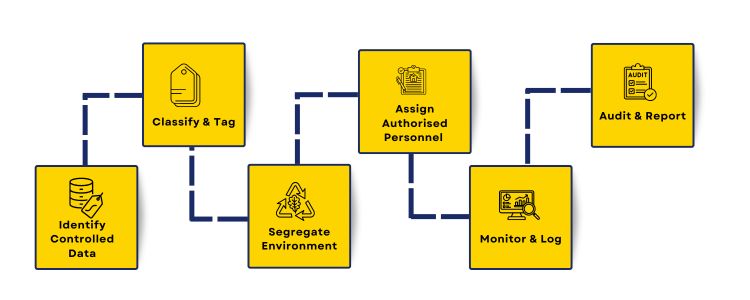
Reality of Enforcement And Risk Reduction.
The Future and Strategic Advantages.
Conclusion

frequently asked questions (FAQs)
1.Who are the Pharma GCC development leaders in India?
2.Which economic benefits do Pharma GCCs have?
3.Which technologies are influencing Pharma GCC operations nowadays?
4.What is the role of AI in Pharma GCC processes?
5.How will Pharma GCCs look in five years to come?

Aditi









Error: Contact form not found. Error: Contact form not found.Subscribe to our Newsletter
Subscribe to our Newsletter
Insights / News
Quick Links