Recent Posts






Technology companies are being asked to do several difficult things at once. They must innovate faster, scale sooner and stay profitable. Spending on cloud infrastructure, engineering talent, software and security keeps rising. Yet many leaders find that business performance does not rise at the same pace. The reason is rarely a lack of investment. Software development, cloud environments and enterprise IT have become more complex, and that complexity quietly absorbs budget. For CEOs, CTOs, CFOs and COOs, the question is no longer simply how much to spend. It is whether every investment in people, technology and processes is producing measurable business value.
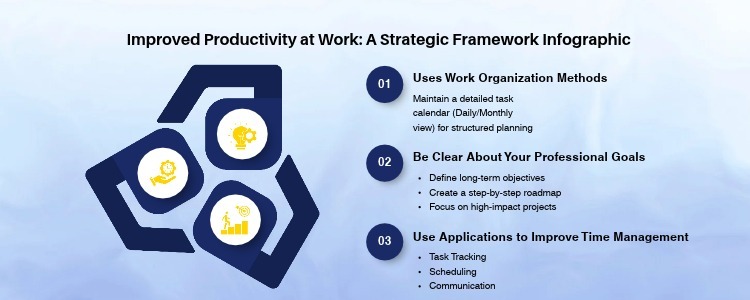
Operational efficiency means getting better results from the resources a company already has. That could be faster releases, more stable systems, happier customers and healthier margins, without a matching rise in cost or headcount. It is often confused with cost reduction, but the two are different. Cost reduction asks how to spend less. Efficiency asks what the business is getting for what it spends. A blunt budget cut can damage quality and morale, while an efficiency effort removes waste and protects what creates value. Spending is an input, productivity is how well that input is used, and performance is what the business finally receives. When productivity is weak, extra spending simply scales the waste. Three habits consistently lift it: being clear about goals, organizing work with proven methods, and using tools that improve time management. Operational efficiency means getting better results from the resources a company already has. That could be faster releases, more stable systems, happier customers and healthier margins, without a matching rise in cost or headcount. It is often confused with cost reduction, but the two are different. Cost reduction asks how to spend less. Efficiency asks what the business is getting for what it spends. A blunt budget cut can damage quality and morale, while an efficiency effort removes waste and protects what creates value. Spending is an input, productivity is how well that input is used, and performance is what the business finally receives. When productivity is weak, extra spending simply scales the waste. Three habits consistently lift it: being clear about goals, organizing work with proven methods, and using tools that improve time management.
Most technology budgets concentrate in five areas. Workforce and engineering is usually the largest, covering salaries, recruitment, onboarding and the cost of replacing people who leave. Cloud and infrastructure comes next, where capacity is easy to buy and just as easy to forget. Software subscriptions add up as teams adopt tools independently. Support and maintenance consume time that could go to new work, especially when processes are manual. Finally, cybersecurity, compliance and governance are essential, though inconsistent controls make them costlier than they need to be. Each category also holds a clear opportunity:
The large cost lines are easy to see. The leaks are harder to spot, and individually they look small. Across departments, however, they add up to serious financial and productivity loss. Common examples include servers and cloud instances running at a fraction of capacity, approvals handled by email, and data re-typed between disconnected systems. Skilled engineers often spend time on routine work while critical projects wait for the right expertise. Overlapping tools and unused licenses quietly drain budget. Technical debt and legacy systems make every change slower and riskier. And when leaders cannot see utilization, delivery speed or cost per workload, none of these problems can be managed properly. That last point shapes everything that follows. Measurement comes first, because it is hard to improve what cannot be seen.
Strategy only works if progress is visible. The most useful metrics fall into four groups: financial performance, engineering productivity, infrastructure utilization, and service quality and reliability. Together, these numbers give finance, engineering and operations a shared view of performance.
Once internal waste is under control, many leaders ask whether where work is done also matters. For a growing number of organizations, India is a strong answer. It should be judged as a place to build long-term capability, not only to save money. India offers a large and steady pipeline of engineering talent, along with deep experience supporting global enterprises. Companies can also find specialized skills in AI, cloud, data and software engineering that are hard to hire for in their home markets. Many businesses start with a dedicated India-based team that works as an extension of their own, aligned to their roadmap, tools and culture. Others go further and set up a Global Capability Center (GCC), a company-owned center that handles engineering, analytics, finance or operations. A sound evaluation looks at the full picture: talent costs, infrastructure, connectivity and state-level incentives, which vary across Indian cities. It also depends on strong governance, with clear contracts, security standards, intellectual property terms and quality reviews. These are what turn a lower-cost location into a dependable one.
Efficiency does not need to be tackled all at once. A five-step sequence keeps the effort focused. First, assess current IT costs and performance to establish a baseline. Second, identify bottlenecks such as idle resources, duplicated tools and manual hand-offs. Third, prioritize initiatives by business impact and return, starting with quick wins that help fund larger changes. Fourth, implement technology, workforce and process improvements together so gains in one area are not lost in another. Fifth, set KPIs, assign owners and review progress on a regular rhythm
Identifying an opportunity is only the first part of the journey. The next step is turning it into an operating model that fits the business. Inductus supports global businesses exploring and establishing GCCs in India through its published BOT, COPO and FLEXI operating models. Build-Operate-Transfer (BOT): A partner builds and operates the center before transferring it to the company under agreed terms. Company-Owned, Partner-Operated (COPO): The company retains ownership while a partner manages specified operational responsibilities. FLEXI: The scope and operational support are tailored to the company’s requirements. Its Discover–Design–Build–Scale framework provides a structured path. Discover assesses business objectives, talent needs, location and cost. Design defines the operating model, governance and implementation plan. Build coordinates talent, infrastructure and operations. Scale plans expansion as the first operation proves its value. The right scope of support depends on each company’s requirements and the applicable legal and regulatory framework.
Operational efficiency is not a one-time project. It is a habit of continuous improvement, in which every technology investment is tied to a measurable business objective and people, infrastructure and processes are improved together. Quality, innovation, security and scalability must remain priorities throughout, because savings that weaken them are not savings at all. For some companies, the journey may begin with a cloud cost review. For others, it may start with a small India-based engineering team. Over time, these steps can grow into capabilities that support long-term growth. At Inductus, we believe the best starting point is a clear business purpose and an operating model designed to support it. A thoughtful look at where your technology budget goes today can be the first step toward making it work harder tomorrow.
I write where strategy meets storytelling. As a passionate writer and literary enthusiast, I craft GCC-focused content that transforms industry insights into compelling narratives. Drawn to global business ecosystems, I enjoy turning research, innovation, and ideas into content that informs, connects, and inspires. With an analytical mind and a creative soul, I bring curiosity, collaboration, and a sharp eye for detail to every project. Adaptable and growth-driven, I believe the right words do more than communicate – they leave an impression.
Understanding Operational Efficiency in the IT Industry
Where Technology Companies Spend the Most
Cost category
Major expenditure
Efficiency opportunity
Workforce
Salaries and recruitment
Strategic workforce planning
Infrastructure
Cloud and computing
Resource optimization
Software
Licensing and subscriptions
License rationalization
Operations
Support and maintenance
Process automation
Governance
Compliance and security
Standardized controls
The Hidden Inefficiencies Affecting IT Performance
How to Measure IT Operational Efficiency
KPI
What it measures
Business relevance
IT cost as % of revenue
Technology expenditure
Financial discipline
Cloud cost per workload
Infrastructure economics
Cost efficiency
Deployment frequency
Software delivery
Engineering performance
Change failure rate
Deployment reliability
Quality control
MTTR
Incident recovery speed
Operational resilience
Employee retention
Workforce stability
Knowledge continuity
The Role of India in Building Cost-Efficient Global Technology Operations
Building an Operational Efficiency Roadmap
How Inductus Can Support Your Technology Operations
Looking Ahead: Efficiency as a Lasting Advantage


Pratibha Soni










Error: Contact form not found. Error: Contact form not found.Subscribe to our Newsletter
Subscribe to our Newsletter