Recent Posts






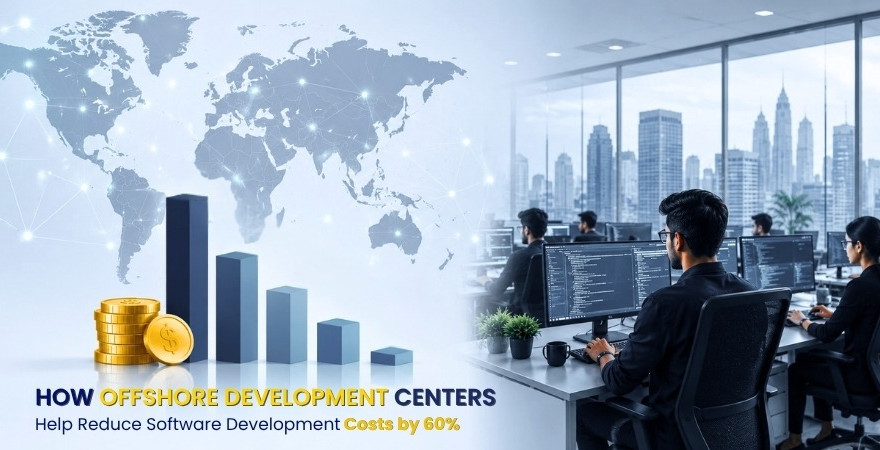
The global software development market saw a massive boom with the coming of age of artificial intelligence in the 1950s. Since then, multiple investments with long-term growth in the IT sector have been witnessed, making software one of the biggest industries of the 21st century. Global organizations are reducing software development expenditure by nearly 60% while simultaneously accelerating delivery timelines, improving engineering productivity, and gaining access to highly specialized talent pools. Offshore Development Centers (ODCs) emerge as one of the highly cost-efficient practices that revolutionize software development by providing dedicated IT teams and services with a holistic, nearly 60% reduction in cost, yet a 100% rate of success, making countries like India a hub for talent acquisition based on its wide pool of advanced engineers, AI readiness, and cloud modernization. The shift is not only about labor arbitrage but also about building resilient, globally distributed engineering organizations capable of supporting AI transformation, cost-effectiveness, cybersecurity expansion, and continuous product innovation. In 2026, enterprises will not ask whether offshore development work is being done. They are asking how quickly they can scale it from a mere software team to a global entity.
An Offshore Development Center (ODC) is a committed organization that works remotely with an engineering unit established in a desirable country to support a company’s software development initiatives. Unlike conventional vendor outsourcing, an ODC operates as an integrated extension of the parent organization’s technology function. Traditional offshore IT outsourcing institutes often focus on short-term project execution, fragmented delivery ownership, and externalized accountability. ODCs, by contrast, prioritize continuity, institutional knowledge retention, product alignment, and long-term engineering maturity. The Software services of a well-established ODC provide The most successful enterprises of 2026 operate distributed engineering ecosystems where offshore teams are embedded into core delivery pipelines rather than isolated from strategic decision-making. This is precisely why ODCs generate deeper cost efficiencies and produce higher advantages as compared to traditional outsourcing structures.
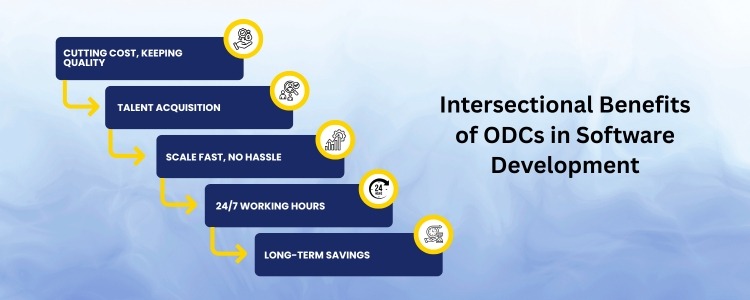
The global software economy is undergoing a major structural shift. As artificial intelligence, cloud computing, automation, and digital platforms become central to business operations, enterprises across industries are investing aggressively in technology transformation. From banking and healthcare to retail, telecom, manufacturing, and logistics, software has evolved from a support function into the backbone of business growth. However, while demand for engineering capabilities continues to rise, the availability of cost-effective talent has become increasingly constrained. In places like the U.S., hiring top AI engineers, cloud architects, DevOps pros, or cybersecurity talent has gotten incredibly expensive. Companies aren’t just dealing with sky-high salaries; they’re also paying hefty recruitment fees, pouring money into infrastructure, juggling compliance headaches, offering perks to keep people on board, and running all sorts of programs to retain staff. Add it all up, and running big engineering teams at home just doesn’t make financial sense anymore for a lot of organizations. That’s why plenty of companies are turning to offshore development centers. With a modern ODC, businesses can put together serious software teams in tech-focused countries like India, Poland, or Vietnam, and they don’t have to sacrifice quality. The talent in these markets knows their stuff, whether it’s AI, SaaS, cloud modernization, blockchain, or DevSecOps. But the real advantage isn’t just about saving on wages. Offshore IT teams give companies room to scale fast and bump up efficiency. Need to ramp up for an AI rollout, overhaul your ERP system, build cloud-native apps, or boost cybersecurity. You can grow your engineering force quickly, without slogging through months of local hiring. Plus, working with teams spread across time zones means the work never really stops. Distributed groups handle development and testing around the clock, speeding up how fast you can get new products and updates out the door. Additionally, ODCs reduce infrastructure burdens by eliminating major operational costs associated with office management, recruitment systems, hardware provisioning, and workforce administration. Organizations also gain access to niche technical expertise on demand, reducing innovation costs while improving agility. Combined with faster time-to-market, higher productivity, and optimized delivery governance, these advantages enable enterprises to reduce software development costs by nearly 60% while maintaining enterprise-grade engineering standards.
Software dev is booming, cloud computing is everywhere, and digital transformation isn’t slowing down. That means banks, hospitals, retailers, telecom companies, factories—you name it—are all on the hunt for talented engineers. Here’s the catch: there just aren’t enough skilled people close by, and hiring locally keeps getting pricier. Offshore development centers let companies tap into deep talent pools in places like India, Poland, and Vietnam without the huge overheads. You get skilled folks for less. Companies save money not just on salaries, but also on things like office space, hiring, and day-to-day management. And quality stays high. Trying to find the right engineers nearby can drag out for months. Offshore IT providers come with ready-to-go talent pools, so businesses can ramp up teams almost overnight. Whether you’re rolling out new AI tools, moving everything to the cloud, modernizing ERP, tightening cybersecurity, or launching new products, you’re ready to move when the market does. With teams spread around the globe, software development turns into a 24/7 operation. Offshore teams keep coding, testing, and deploying even when your local office sleeps. Deadlines get tighter, products launch faster, and progress never really hits pause. ODCs put experts like AI engineers, DevOps pros, cloud architects, MLOps gurus, and cybersecurity specialists right at your fingertips. Need a niche skill for a short sprint. You don’t have to keep expensive experts in-house; just bring them in when you need that boost. Offshore development centers drive real savings up to 60% by streamlining productivity, slashing hiring costs, and cutting operational overhead. That frees up room in the budget to invest where it matters most.
With the advancement of artificial intelligence, we’re accelerating towards the digital world; this highlights the importance of software-based ODCs that can keep up with the pace. They require systems that are scalable, resilient in the face of challenges, and cost-effective. Innovation should continue, regardless of time zones. Estimated that by 2030, discussions about “local” versus “offshore” will likely minimize as those distinctions become less clear. The most successful companies organize their teams based on skills and capabilities rather than geographic location. The ones that grasp this early on not only save money but also achieve significant victories. They reduce expenses, accelerate processes, maximize the potential of AI, manage larger workloads, create robust systems, and launch new products ahead of their rivals. Offshore development centers aren’t limited to being labeled as cost-saving alternatives, but they’re rather the soul of the operations of companies. Even outsourcing firms these days are termed outdated, thus lagging as compared to the ODCs, which lie in establishing genuine global engineering networks that foster sustained innovation and growth. This is why, by 2026, offshore development centers will not just be a fad; they will be a foundational aspect of business transformation.
I write where strategy meets storytelling. As a passionate writer and literary enthusiast, I craft GCC-focused content that transforms industry insights into compelling narratives. Drawn to global business ecosystems, I enjoy turning research, innovation, and ideas into content that informs, connects, and inspires. With an analytical mind and a creative soul, I bring curiosity, collaboration, and a sharp eye for detail to every project. Adaptable and growth-driven, I believe the right words do more than communicate – they leave an impression.
What are Offshore Development Centers?
Why does software development rely on offshore development centers?
Intersectional Benefits of ODCs in Software Development

Into the Future

Pratibha Soni









Error: Contact form not found. Error: Contact form not found.Subscribe to our Newsletter
Subscribe to our Newsletter