Recent Posts






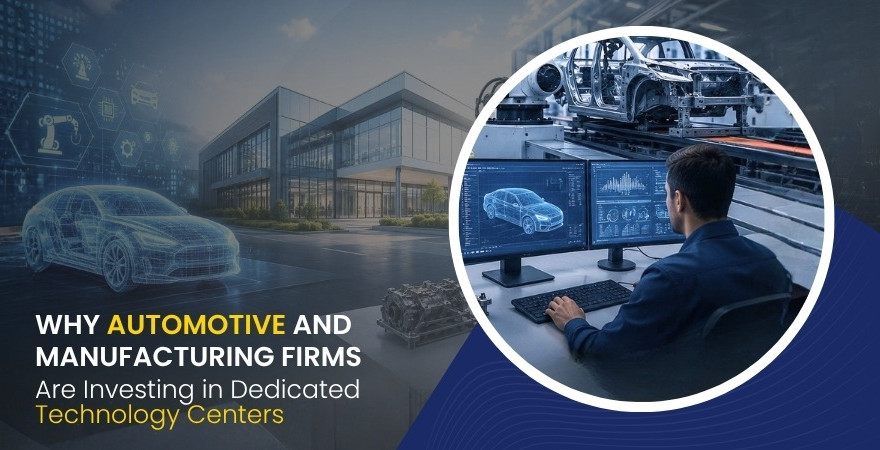
As the automotive industry accelerates into the future, the rise of the automotive technology center is reshaping how companies design, test, and scale innovation across the world. Incorporation of the Internet, connected systems, and software-defined vehicles is pushing automakers beyond conventional manufacturing and into a new era of digital engineering, advanced R&D, and intelligent mobility platforms. “Global competition is getting tougher, pushing down company margins,” IEA The International Energy Agency, warned heavily in its report on Global EV Outlook 2024. Moving towards increased affordability, about the recent past of increasing competition on a global level, and the urgent need to venture into manufacturing technology centers that are dedicated to elevating the automotive industry. “Leading electric vehicle start-ups and venture capital investments are geographically concentrated,” IEA. To expand rapidly, industry analysis shows that vehicles are increasingly being re-architected around software and data rather than hardware alone, and are cooperating with dedicated technological centers. In this evolving landscape, global business centers and GCCs are becoming vital enablers of capability building, helping enterprises access skilled talent, strengthen innovation pipelines, and improve operational agility. Recent GCC reports describe these centers as strategic hubs for innovation, digital transformation, and resilient growth, supported by deep talent pools and intelligent infrastructure. With the right guidance and expansion through global business centres, an automotive technology centre can widen its reach, deepen research innovation, sharpen craftsmanship, and bring next-generation mobility concepts closer to reality.
Growth by connecting highly skilled professionals through industry events, collaborative ecosystems, and strong networking platforms that continuously strengthen the automotive and manufacturing landscape. Such growth factors play a major role in influencing investments into Shared Services Centers (SSCs), Global Capability Centers (GCCs), and dedicated automotive technology centers. For the automotive industry, investment decisions are no longer based solely on manufacturing costs. Companies now prioritize locations that offer access to engineering talent, digital infrastructure, research institutions, and innovation-driven ecosystems. Cities with strong industrial clusters create an environment where automotive firms can seamlessly integrate R&D, software engineering, EV development, AI mobility solutions, supply chain management, and smart manufacturing operations under one ecosystem. This becomes especially important as automotive companies move toward electric vehicles, autonomous systems, connected mobility, and software-defined manufacturing. The availability of a large talent pool with technical and engineering expertise, especially in a country like India, often named “Engineering Paradise,” particularly in renowned IT hubs like Bengaluru, Pune, and Hyderabad. These locations provide extraordinary skills. A major example is Toyota Motor Corporation (a Japanese multinational manufacturing hub), which has expanded its India operations by investing in manufacturing, hybrid technology, supply chain localization, and engineering capabilities. The turn towards the 21st century forces and foresees technological advancement at its best and if a multinational brand keeps its work stagnant in a geographical zone, it may negatively affect the sales and growth of the company. For better and heightened projection, the investment structure should incorporate technologically dedicated GCCs from different countries. For example, Japanese automotive industries are investing in the Indian GCC of the Delhi NCR section for not only geographical benefits but also technological benefits. Global automotive and manufacturing firms are increasingly investing in Indian GCCs and automotive technology centers to strengthen innovation, digital engineering, and global operations. Germany’s Bosch has expanded engineering and mobility R&D hubs in India for AI, connected vehicles, and smart manufacturing. The United States-based Ford Motor Company utilizes Indian capability centers for software development, analytics, and automotive engineering support. South Korea’s Hyundai Motor Group has invested in EV research, manufacturing, and mobility innovation centers in India. These investments strengthen international relations by encouraging technology exchange, employment generation, industrial collaboration, supply chain integration, and long-term economic partnerships, positioning India as a global hub for automotive innovation and future mobility development. Investments in Indian GCCs and automotive technology centers have significantly strengthened sales, collaboration, and global industrial partnerships. “India GCC revenue crossing approximately US$64 billion and 1,700+ GCCs.” Business of GCC Report: With automotive and manufacturing emerging among the fastest-growing sectors. “Japanese automakers investing nearly US$11 billion in India (Toyota, Suzuki, Honda)” IBEF Automotive Investment Report. Investment across EVs, manufacturing, and engineering expansion in India. Global firms using Indian GCCs report faster product development, reduced operational costs, and stronger access to skilled engineering talent. India also became the world’s third-largest automobile market, crossing 28 million vehicle sales annually.
The automotive industry is changing fast, and it is not just about making cars like we used to. Now it is about originating ideas, inculcating software in cars, and making them smart. Many multinational companies are setting up advanced technological centers to work on new car technology and make better automation. These centers help companies work on ideas to produce computerized cars more smartly, make electric cars, and connect cars to the internet. India is a place for these companies to set up their centers because it has skilled engineers, good digital infrastructure, and it is affordable to innovate. There are more than 2100 of these centers in India, generating around 64 billion US dollars. Big car companies like Toyota, Suzuki, Bosch, Ford, and Hyundai are investing money in India to work on new car technology and electric cars. India is now the third biggest in the world, with over 28 million cars sold every year. By fostering international partnerships and innovation-driven operations, automotive technology centers also contribute to sustainable growth, resilient supply chains, and future-ready manufacturing practices. As global demand for intelligent and environmentally conscious mobility increases, these centers will remain essential in driving competitiveness, technological excellence, and long-term sustainability across the global automotive industry.
I write where strategy meets storytelling. As a passionate writer and literary enthusiast, I craft GCC-focused content that transforms industry insights into compelling narratives. Drawn to global business ecosystems, I enjoy turning research, innovation, and ideas into content that informs, connects, and inspires. With an analytical mind and a creative soul, I bring curiosity, collaboration, and a sharp eye for detail to every project. Adaptable and growth-driven, I believe the right words do more than communicate – they leave an impression.
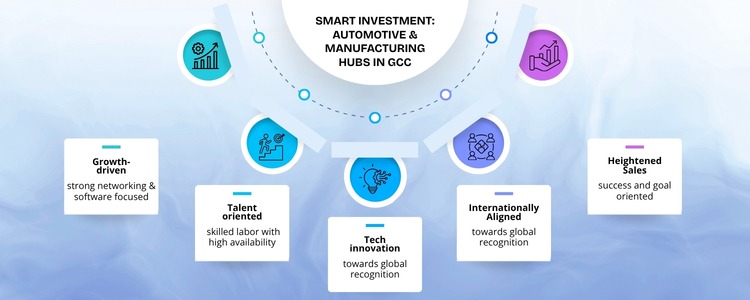
Towards Smart Investment: Automotive and Manufacturing Firms Strengthening Technology Centers
Conclusion


Pratibha Soni








Error: Contact form not found. Error: Contact form not found.Subscribe to our Newsletter
Subscribe to our Newsletter