Recent Posts






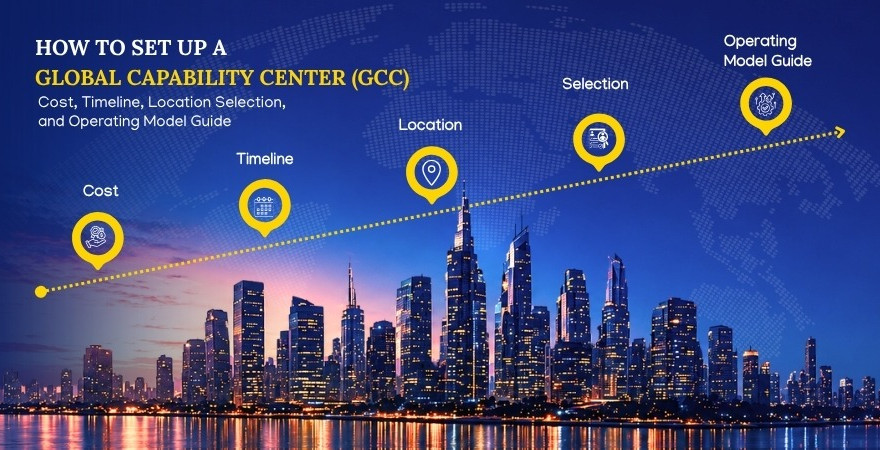
“The future belongs to those who understand that global cooperation and innovation are no longer optional—they are the foundation of sustainable growth.”
The modern enterprise is no longer defined by its headquarters. It is defined by how effectively it leverages global talent, innovation ecosystems, and operational excellence across borders. This is precisely why the Global Capability Center (GCC) has emerged as one of the most transformative business models of the 21st century. As artificial intelligence, automation, cloud computing, and digital transformation reshape industries, organizations are increasingly building strategic hubs beyond their home markets. GCCs are not merely cost arbitrage vehicles; they are innovation engines that accelerate product development, enhance customer experiences, and create high-value employment ecosystems. In an interconnected world, global capability centers serve as bridges between global ambitions and localized expertise, driving economic growth, urban development, and enterprise resilience simultaneously.
A Global Capability Center (GCC) is basically an offshore branch that multinational companies set up to handle major functions, everything from technology and finance to HR, research, legal, and operations. Usually, these centers are either fully owned or strategically managed, so companies keep control. Over the past decade, GCCs have really taken off, especially in India. Now, there are more than 2,100 GCCs supporting global businesses there. And the numbers aren’t slowing down; experts say we’ll see more GCCs, bigger workforces, and a bigger role in the economy right into the 2030s. So, what’s making GCCs so vital now? Think about it: no big company wants to depend on a single country for talent, innovation, or staying up and running; thus, the diversification of assets leads to better profit margins and lower risks.
For enterprises evaluating a Global Capability Center, success depends on a structured, milestone-driven approach rather than a real-estate decision. This GCC setup guide outlines the most critical elements organizations must evaluate, from investment planning and location strategy to operating models, talent readiness, and long-term scalability. Each component plays a decisive role in determining whether a GCC becomes a cost center or a strategic growth engine. How much you’ll spend on a global capability center really comes down to a few things: how big you want it, where it’s going, how you’ll run it, and what you actually want it to do. If you’re aiming for a lean setup, just handling shared services or tech support, you’re looking at an initial investment of anywhere from $500,000 up to $2 million. If you need something mid-sized, say a center that handles engineering, analytics, finance, and customer operations, the investment usually jumps to the $3 million to $10 million range. For enterprise-level centers—those focused on things like product engineering, R&D, AI, cybersecurity, or full-scale digital transformation—costs can easily top $20 million by the time you’ve finished setup and are ready to scale. But it doesn’t stop at just getting the building and computers in place. You also have to budget for recruiting talent, investing in the right tech platforms, building your governance and compliance systems, training people, and hiring strong leadership. Even so, once these centers hit maturity, they tend to make a real impact. You’ll see gains in productivity, higher innovation, better talent retention, and smoother operations. You can get a basic GCC up and running in four to six months if you keep things small and focused. But building something truly enterprise-grade, a full-scale capability center, takes way longer. We’re talking 18 to 36 months, and you’ve got to scale up thoughtfully as you go. The best GCCs don’t just pop up all at once. They move through clear stages: figuring out the strategy, picking the right location, handling legal work, setting up infrastructure, bringing in leadership, hiring talent, transferring capabilities, and then optimizing operations. Honestly, industry trends show that taking your time pays off. Companies that invest in governance, work seriously on culture, transfer knowledge carefully, and develop strong leaders usually see better results down the line. Modern Global Capability Centers handle everything from software development and cloud engineering to cybersecurity, AI, product management, finance, procurement, and customer support—you name it. They also take care of HR, legal, compliance, risk management, supply chain, analytics, business intelligence, and even research and development. Most organizations start with the basics, transactional functions, and then build up to more strategic work. But that’s changing. The key: Get clear about the outcomes you want, figure out your must-have capabilities, and lock in your long-term priorities. That way, you’ll bring the right mix of functions together and keep everything connected as your center grows. Choosing the right location shapes everything, from the kind of talent you can hire to how efficiently you operate to what you’ll pay over the long run. Tier-1 cities have a lot going for them. You get top-notch infrastructure, easy global connections, seasoned leaders, and people with specific skills you struggle to find elsewhere. But lately, Tier-2 cities have started to steal some of the spotlight. They blend reasonable costs with strong talent pools, which is why more companies are investing there. Bottom line: the cheapest spot almost never turns out to be the smartest bet. The most successful global capability centers pick locations with an eye on the future. They focus on having a steady supply of talent, good schools and training partners, strong business continuity, regulatory support, and plenty of room for growth, rather than just chasing short-term savings. Choosing the right operating model decides whether your GCC actually delivers real, lasting value. If you go with a captive GCC, you’re in the driver’s seat, you get total control, your goals stay front and center, and you own your talent and intellectual property outright. The BOT route, on the other hand, gets you in the game quicker and cuts down on those messy startup headaches. Then there’s the hybrid approach, which lets you hang onto the steering wheel but brings in expert help outside, so you scale faster and dodge some of the risk. What works best depends on how mature your organization is, how much you’re willing to invest, your risk tolerance, and where you want to go next. It isn’t just about saving money. You need to think about governance, how you foster innovation, and whether your model keeps doors open for future growth. It’s not just about salaries or keeping the lights on. There are ongoing costs for tech infrastructure, cloud services, cybersecurity, compliance, employee engagement, training, and leadership programs. Don’t forget legal support and making sure your operations can keep running if there’s a disruption. As your GCC gets bigger, you also have to budget for things like innovation labs, advanced tech, and expanding your team’s capabilities. The best-run GCCs don’t just spend, they spend wisely. They make sure every dollar going out ties back to productivity and business goals. Smart financial planning connects growth, talent, and expansion to the bigger strategy, while still watching the bottom line and building real value for the company.
Launching a global capability center isn’t just about financial advantage anymore; it’s a strategic move to stay ahead of the curve. Every choice you make along the way, picking the right location, structuring your operations, and planning expansion, sets the course for your GCC’s future impact. Companies that go in with a strong vision, stick to disciplined execution, and build governance that can scale always end up ahead of those chasing only short-term savings.
I write where strategy meets storytelling. As a passionate writer and literary enthusiast, I craft GCC-focused content that transforms industry insights into compelling narratives. Drawn to global business ecosystems, I enjoy turning research, innovation, and ideas into content that informs, connects, and inspires. With an analytical mind and a creative soul, I bring curiosity, collaboration, and a sharp eye for detail to every project. Adaptable and growth-driven, I believe the right words do more than communicate – they leave an impression.
World Economic Forum
Must-Knows About GCCs—
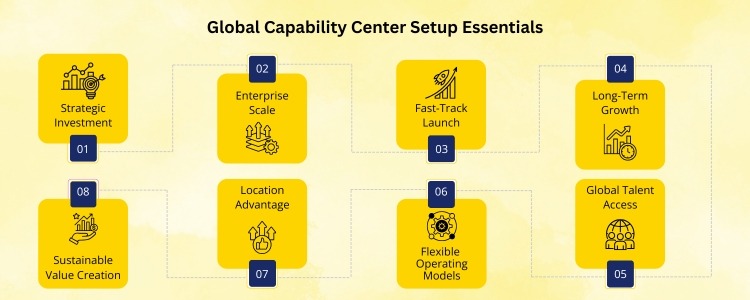
Roadmap of a Successful GCC Structure:

Conclusion

Pratibha Soni








Error: Contact form not found. Error: Contact form not found.Subscribe to our Newsletter
Subscribe to our Newsletter