Recent Posts





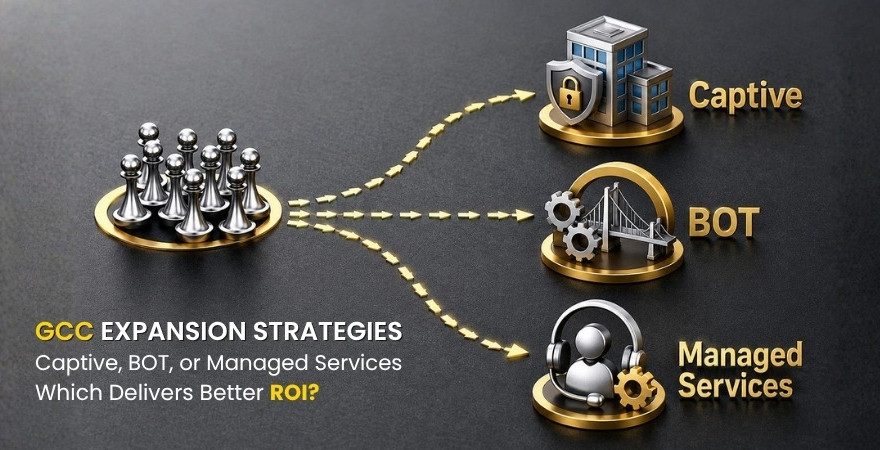
In today’s hyperconnected business environment, enterprises are no longer building global capability centers merely to reduce operational costs. As organizations accelerate global expansion, the conversation around GCC expansion strategies has become significantly more nuanced and outcome-driven. The big question isn’t about starting a GCC; it’s about picking the right setup that brings the best long-term value, flexibility, and control. Should companies go all-in with a fully owned captive center, try a build-operate-transfer model, or use agile managed services? Every option changes how you handle governance, scale up, hire talent, launch quickly, and control costs.
When companies look to expand their Global Capability Centers (GCCs), it’s easy to fall into the trap of picking whatever saves the most money upfront. But the leaders who get it right know it’s not about compromise.
What really drives ROI for a global capability center? It’s not just about affordable labor, despite what some leaders might hope. The real payoff comes from a mix of smart strategies and tough choices, starting with talent. Top-notch engineers, data scientists, cyber experts, and digital leaders don’t just boost productivity; they fuel innovation and keep the business running smoothly. If you lack that talent ecosystem, your offshore GCC is always going to lag. Geographical location: placement influences infrastructure readiness, operational cost, talent pool, and ecosystem maturity. The depth of the local ecosystem of the area also matters. That’s why global tech hubs like India stand out; they offer not just skilled professionals but also the right environment for a GCC to thrive.
The ever-changing world of the 21st century relies heavily on AI-powered setups, with GCCs incorporating AI into their operations to smooth the process and minimize damages. GCC expansion strategies are being renovated by rapid advancements in AI, automation, cloud computing, and digital-first enterprise transformation. Modern GCCs are no longer transactional units of comfort but rather are becoming innovation-led business ecosystems driving enterprise-wide strategic impact. These evolving trends are redefining how enterprises approach long-term global capability center strategy and offshore transformation.
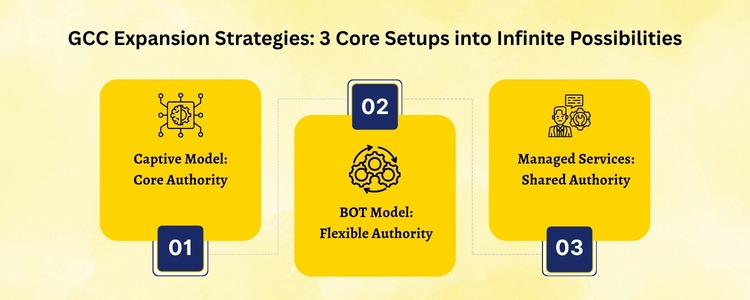
The future lies in how quickly enterprises will effectively implement, design, and execute their respective ‘tried-and-tested’ models for GCC expansion strategies. Be it the Captive framework, BOT upholding, or managed shared services for GCC, the endgame is to build long-term successful partnerships, establishing innovative ecosystems. An ideal Global Capability Center strategizes and maximizes potential to empower the highest ROI, incorporates digital transformation and stringent resilience, and matches the competitiveness of the market. With the world becoming AI-centric and meta-connected, GCCs need to enhance and adapt to the needs of the hour and implement future-ready GCC operating models to foster growth and increase ROI.
I write where strategy meets storytelling. As a passionate writer and literary enthusiast, I craft GCC-focused content that transforms industry insights into compelling narratives. Drawn to global business ecosystems, I enjoy turning research, innovation, and ideas into content that informs, connects, and inspires. With an analytical mind and a creative soul, I bring curiosity, collaboration, and a sharp eye for detail to every project. Adaptable and growth-driven, I believe the right words do more than communicate – they leave an impression.
Comparison over Compromise
Key Factors That Influence GCC ROI
Emerging Trends Reshaping GCC Expansion Strategies
Leap into Future


Pratibha Soni






Error: Contact form not found. Error: Contact form not found.Subscribe to our Newsletter
Subscribe to our Newsletter