Recent Posts





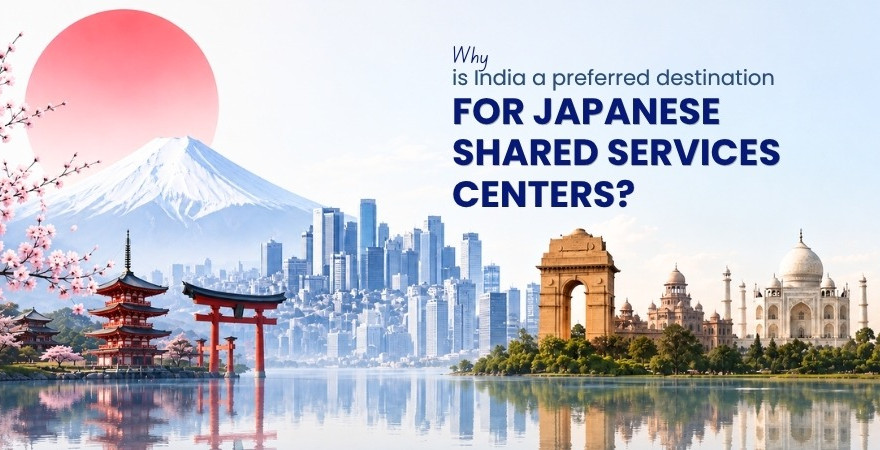
The Japanese leap into the Shared Services Centres (SSCs) has skilfully paved the way for setting up a global-scale partnership among countries, with India at the forefront. The relationship between India and Japan is one of Asia’s most strategically important partnerships today. It spans politics, trade, defence, infrastructure, technology, supply chains, semiconductors, energy, maritime security, and digital transformation. Shared Service Centers (SSCs), popularly known as Global Capability Centers (GCCs) in India, aid multinational companies as a captive offshore center. Today, GCCs are much broader. They handle technology, R&D, finance, AI, engineering, analytics, cybersecurity, product development, and global operations. India is becoming increasingly important to Japanese companies not only as an outsourcing destination but also as a long-term strategic innovation and operations partner. Today, Japanese captive centers in India are no longer limited to back-office outsourcing butoutsourcing rather havehas widened their audience to major sectors like geopolitical, economic, technological, industrial, and strategic—all, all at once. The estimates suggest approximately 80–90 Japanese GCCs/GBS/ captive centers currently operate in India. These centers collectively employ roughly 210,000+roughly, 210,000+ professionals. By 2028, projections suggest aroundsuggest: around 150 Japanese GCCs, employing 350,000+ people, with billions in annual investment flows.
The Rising Labor Crisis in Japan Japan is facing one of the world’s most severe demographic and labor challenges due to a rapidly aging population and very low fertility rates. This demographic shift has created major labor shortages across sectors, including manufacturing, healthcare, construction, retail, logistics, and information technology. Japan’s working-age population is shrinking significantly, limiting domestic talent availability for digital transformation and industrial growth. Companies increasingly struggle to hire software engineers, AI specialists, and skilled technical workers. To address these challenges, Japan is promoting automation, robotics, selective immigration, and offshore global operations. Countries like India have become important partners by providing engineering talent, IT services, and Global Capability Center (GCC) support for Japanese enterprises. India: Global Hub of Cost-Efficient Growth India has become a preferred destination for Shared Service CentersCentres (SSCs)(SSC) and Global Capability Centers (GCCs) because it combines cost efficiency with one of the world’s largest skilled labor pools. India currently hosts over 1,800 GCCs employing nearly 1.9 million professionals across technology, finance, engineering, healthcare, analytics, and customer operations. For global companies, including Japanese enterprises, India offers significant labor-cost advantages compared to developed economies while maintaining strong technical capability. Companies can rapidly scale teams in AI, cloud computing, finance, cybersecurity, semiconductor engineering, and manufacturing operations. India’s mature outsourcing ecosystem, English-speaking workforce, and strong digital infrastructure further strengthen its appeal. Indian cities such as Bengaluru, Hyderabad, Chennai, and Pune provide specialized talent ecosystems for the automotive, BFSI, electronics, and industrial engineering sectors.
India has emerged as one of the world’s largest talent hubs for IT, engineering, management, analytics, and AI-driven business operations. Every year, India produces millions of graduates in computer science, engineering, finance, business management, and digital technologies. technologies, creating a vast and highly adaptable workforce. Indian professionals are globally recognized for their technical expertise, problem-solving ability, creativity, and capacity to manage complex global operations at scale. India’s IT and management sectors have evolved far beyond traditional outsourcing. Today, Indian talent powers advanced work in artificial intelligence, cloud computing, cybersecurity, semiconductor design, fintech, automation, robotics, and enterprise transformation. Indian professionals are also increasingly leading global innovation centres, shared service centres (SSCs), and global capability centres (GCCs) for multinational corporations. The country’s startup ecosystem, digital economy, and strong English-language capability further enhance workforce competitiveness. Combined with rapid AI adoption and continuous upskilling, India offers companies a highly skilled, agile, and future-ready talent ecosystem capable of driving global innovation and digital transformation.
The relationship between India and Japan has evolved into a strong strategic, financial, cultural, and technological partnership. Officially termed a “Special Strategic and Global Partnership,” it is driven by shared democratic values, Indo-Pacific stability, and long-term economic cooperation. Japan is one of India’s largest foreign investors, supporting major infrastructure projects such as the Mumbai-Ahmedabad High-Speed Rail Project and the Delhi-Mumbai Industrial Corridor. Japanese companies have invested heavily in automotive, electronics, manufacturing, and Global Capability Centres (GCCs) across India. Strategically, both nations cooperate through the Quadrilateral Security Dialogue on maritime security, supply chains, semiconductors, and emerging technologies. Cultural ties continue to deepen through Buddhism, education exchanges, anime, Japanese language learning, and growing tourism. India provides Japan with engineering talent and digital capability, while Japan contributes technology, manufacturing excellence, and long-term capital investment.
India has become one of the world’s most strategically important markets due to its large population, expanding middle class, rapid digital adoption, and strong economic growth. With over 1.4 billion people, India represents a massive consumer and business market across sectors, including technology, automotive, finance, e-commerce, healthcare, manufacturing, and telecommunications. India is currently among the world’s fastest-growing major economies and has become a critical market for global corporations such as Toyota Motor, Sony Group, Amazon, Apple, and Samsung Electronics. India’s digital economy, supported by platforms like UPI and Aadhaar, has accelerated fintech, e-commerce, and digital services growth at a global scale. The country is also a major manufacturing and innovation hub under initiatives such as “Make in India.” Rising urbanization, increasing internet penetration, and growing consumer spending make India not only a talent destination but also a high-value long-term strategic market for global enterprises and investors.
The future outlook for Japanese shared service centres in India is highly positive; positive, high-growth areas include AI and generative AI. Japanese firms are investing heavily in AI engineering teams in India. Semiconductor Ecosystems: Ecosystems, India, and Japan are strengthening semiconductor partnerships. Automotive Software EVs, autonomous systems, and embedded software will drive demand. Robotics and Industrial Automation: Japanese manufacturing expertise, combined with Indian engineering talent, creates strong opportunities. Cybersecurity and Cloud Engineering: Growing global digital operations require scalable Indian teams.
The strategic partnership between India and Japan extends far beyond domestic economic cooperation. Rather than functioning as a traditional offshore outsourcing relationship, India has emerged as a strategic expansion platform for Japanese enterprises seeking access not only to the Indian market but also to broader opportunities across the West, the Middle East, and Asia. Through Japanese SharedJapanese, Shared Service Centers (SSC), manufacturing investments, and digital innovation hubs, India is strengthening its position as a global business and technology gateway. This collaboration contributes significantly to economic growth in both nations by driving foreign investment, expanding industrial capacity, accelerating digital transformation, and supporting high-value employment generation. The India–Japan partnership is also fostering rapid urbanization, infrastructure development, and GDP within India’s diverse consumer and technology markets. Increased investment inflows, rising digital adoption, and expanding global operations are enhancing India’s economic influence and reinforcing its emergence as one of the world’s leading digital and innovation-driven economies.
Companies can cut their costs by 30-50% due to the availability of high-quality but inexpensive labor from India. The low cost of property and infrastructure investments also adds to the efficiency of operations. A favorable currency position also assists multinational corporations in managing their expenditures and maximizing benefits. Most significantly, all these economies are achieved without sacrificing quality, innovation, or speed of delivery. India is home to a massive resource pool of skilled professionals in AI and data science, making innovation easier. Over 500 GCCs with an emphasis on AI are available for technologies such as machine learning and GenAI. These GCCs assist firms in developing their own proprietary platforms and IP. .Thus, Indian GCCs are crucial in the context of global AI innovation and transformation. India is expected to have 2,100-2,500 GCCs by 2030 due to high growth. These centers will become more important for international business, innovation, and product development. GCCs will be at the forefront of innovation, including AI, digitization, and decision-making. In general, they will make a significant contribution to India’s economy and international business. India boasts an enormous reservoir of STEM professionals, which allows firms to expand their workforce rapidly. It has a robust digital infrastructure, which fosters innovation and international business. Its cost efficiencies make it extremely effective as opposed to other international destinations. A developed environment in AI, cloud computing, and data science ensures constant innovation and development. Global Capability Centers (GCCs) in India are enterprise-owned hubs that deliver end-to-end services like product development, R&D, AI, and digital transformation. They go beyond traditional outsourcing to drive innovation and business strategy. With a keen analytical mindset and a passion for data-driven insights, Babita Gangwar brings expertise in research, analysis, and strategic evaluation. As a Research Analyst, she focuses on transforming complex data into actionable intelligence that supports informed decision-making. She collaborates across teams to deliver high-quality research outputs, ensuring accuracy, relevance, and impact. Her interests span market research, data analytics, and emerging industry trends. A detail-oriented professional, she actively contributes to knowledge development through reports, presentations, and research initiatives.
The infinite offeringsoffers of Indian grounds for Japanese shared service centers, Shared Service Centres, and innovation hubs.
Skilled, Dynamic, Global: Indian Workforce
Two Nations-One Shared Vision: Indo-Japan
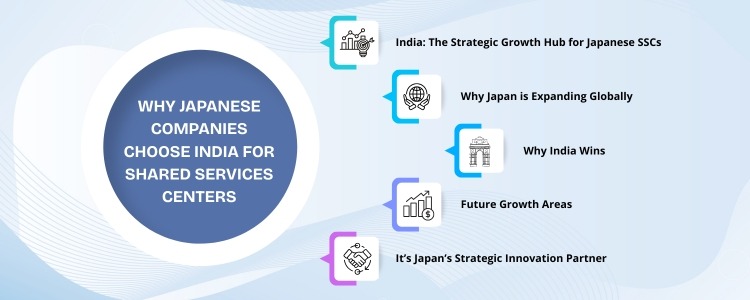
Expansive, Diverse, Strategic: India’s Market
Leap into the Future: Japanese Shared Services Centres (SSCs) in India
Conclusion

frequently asked questions (FAQs)
1.What cost advantages do GCCs in India offer?
2.How do GCCs in India support AI and innovation?
3.What is the future outlook for GCCs in India?
4.What makes India a top destination for GCC expansion?
5.What are Global Capability Centers (GCCs) in India?

Babita Gangwar







Error: Contact form not found. Error: Contact form not found.Subscribe to our Newsletter
Subscribe to our Newsletter