Recent Posts






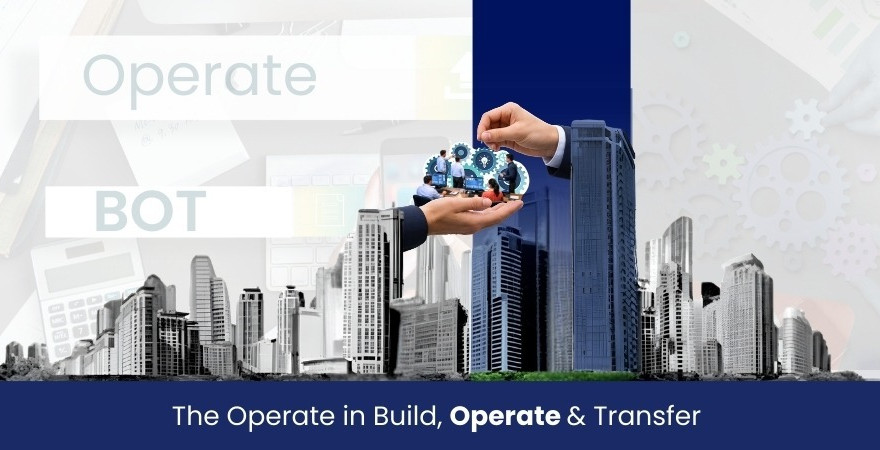
The BOT model’s distinctive value proposition rests entirely on what happens during Operate. In conventional outsourcing, the client gains operational capacity at lower cost but permanently externalizes both the work and the capability to do it. The BOT model promises something different: the client builds genuine capability during Operate so that when Transfer occurs, the center is not merely an operation the client now owns but a capability the client now controls. The distinction is material. An operation is a set of processes, tools, and people that produce outputs. A capability is the organizational knowledge, judgment, and talent depth required to sustain, adapt, and improve those processes without external dependency. Transfer of an operation is logistically complex. Transfer of a capability requires that the capability was actually built during operation, and in engagements managed purely as service delivery contracts, it frequently is not. Inductus’ framework addresses this gap by embedding transformation directly into the operating contract, requiring the partner to not only run operations but to systematically improve them, document the improvement logic, and ensure the client team can replicate it. Whether framed as such or not, this is the right mental model for what the Operate phase must accomplish. The Operate phase is not a period of managed delegation. It is a scheduled, governed transfer of organizational capability from partner to client, conducted in parallel with active operations.
The most structurally significant tension of the Operate phase is rarely named in BOT contracts: the partner’s commercial interests and the client’s strategic interests point in opposite directions on the question of client independence. A well-run BOT partner is rewarded for operational continuity, SLA attainment, and client satisfaction. None of these metrics reward the partner for making the client less dependent on the partner. Building client independence, in its most honest form, is work that accelerates the end of the engagement. Sophisticated contracts address this through two mechanisms. Milestone-based incentive structures tie a portion of the partner’s compensation to client capability milestones: the percentage of processes independently executable by the client team, shadow leadership completion rates, and scores on transfer readiness audits. These incentives, when well-designed, align the partner’s commercial interest with the client’s independence objective. The second mechanism is reputational: BOT partners who develop a track record of producing transfer-ready clients, measured by post-transfer operational stability rather than pre-transfer SLA dashboards, command premium pricing in an increasingly competitive market. Both mechanisms require deliberate design before the engagement begins.
Each month of the Operate phase in which the client does not actively build internal capability is a month in which the gap between operational complexity and client readiness widens. This dynamic is the Operate phase’s most insidious risk because it is invisible until the Transfer phase, when it surfaces as transfer shock. Dependency accumulation operates through three channels. Process complexity growth: as the center matures, the scope and sophistication of work typically expand. If client capability development does not keep pace, the center becomes harder to transfer with each passing quarter. Relationship capital drift: the partner’s team builds relationships with external vendors, regulatory contacts, and talent market connections that accumulate on the partner side and must be actively transferred during Operate, not at Transfer. Organizational forgetting: client-side teams, freed from the complexity of running the center, redirect attention elsewhere. Over 24 to 36 months, institutional knowledge about offshore operations atrophies, making transfer more disruptive than it would have been earlier. The mitigation is structured graduated ownership: a planned schedule through which client internal teams progressively assume ownership of specific operational domains while the partner retains accountability for performance outcomes. By month 12, the client owns talent strategy while the partner manages execution. By month 18, the client owns vendor selection while the partner manages vendor performance. By month 24, the client owns escalation pathways while the partner manages day-to-day resolution. The schedule must be contractually embedded, not aspirationally noted.
Service Level Agreements are the governance backbone of almost every BOT Operate phase, and they are deeply inadequate as the primary measure of Operate phase health. SLAs measure whether the operation is running. They provide almost no signal about whether the capability required to run the operation is being built on the client side. The consequence of SLA-dominant governance is that organizations receive excellent monthly dashboards while fundamental transfer readiness dimensions go unmeasured and therefore unmanaged. The first view most organizations have of their actual transfer readiness is the audit conducted 90 days before Transfer Day, when deficiencies are expensive and sometimes impossible to remediate within the remaining timeline. The solution is a parallel Transfer Readiness Index tracked quarterly from Month 1 of Operate, covering legal and entity preparation, people and leadership capability, process documentation completeness, technology and access independence, and governance maturity. Organizations that introduce the TRI at Month 1 consistently enter the Transfer phase with fewer and smaller gaps than those that introduce it in the final quarter of Operate.
Professionals employed in a BOT center sit in an organizational identity paradox. They are formally employed by the BOT partner, with payroll, HR management, and performance reviews sitting with the partner. But they deliver work aligned with the client’s culture and strategic priorities, and they know they are likely to become direct client employees at transfer. This dual identity creates dynamics most governance frameworks handle poorly. Loyalty ambiguity is the first consequence. When a high-performing engineer receives a competing offer, their decision calculus is more complex than in a direct employment relationship. Career development sits with the partner. Work identity sits increasingly with the client. Future employment, if the transfer proceeds, sits with the client. This ambiguity creates attrition vulnerability around months 18 to 24, precisely when the center is at peak operational value and transfer timelines are being crystallized. Performance management complexity follows: formal review, compensation, and promotion decisions sit with the partner, but the client has the most direct visibility into individual performance. When assessments diverge, the gap creates friction that both reduces quality and signals to the individual that their organizational context is unresolved. Leading engagements address this through co-designed talent management: jointly defined performance criteria, calibrated reviews with client participation, transparent criteria for transfer employment offers, and early clarity on whether the client will match or improve partner compensation and how seniority and vesting will be treated. Plugscale’s GCC practice documentation identifies this early clarity as among the highest-return investments in talent stability available to the BOT client.
The Operate phase moves through distinct maturity stages, each with a different balance of partner and client responsibility and a different capability development priority. The following model is synthesized from practitioner engagements across technology, pharma, and shared services sectors. Stabilization (Months 1 to 6) The first six months are legitimately about stability: proving delivery works, that talent hired during Build performs, and that governance mechanisms function in practice. The critical discipline is resisting the temptation to treat SLA attainment as sufficient evidence of success. An operation that meets its SLAs while running on undocumented processes and talent that does not yet understand the client’s strategic context is operationally stable but strategically fragile. Stabilization must include a parallel second track: initiation of process documentation, shadow leadership program design, and TRI baseline assessment. Organizations that defer this second track until after stabilization is confirmed typically lose six months of critical capability development time. Optimization (Months 6 to 18) This is where the Operate phase generates its most distinctive value relative to conventional outsourcing. Three parallel movements characterize engagements that manage Optimization well: systematic process improvement beyond the SLA floor; deliberate scope expansion, moving the center’s work from execution toward analysis and design in a sequence that matches talent development with task complexity; and client integration deepening, where the center becomes embedded in the client’s operating rhythm through direct participation in planning, communications, and relationship-building across organizational levels. Deloitte’s BOTT model encodes this as the Transform stage, requiring the partner to drive process transformation contractually. Whether framed as ion, “transform” or “optimization,” the substance is identical: the Operate phase must generate organizational capability that did not exist before the engagement began. Capability Deepening (Months 18 to 30) This stage is where the transition of strategic ownership from partner to client must become visible in governance structures. The client should be asserting strategic direction, not validating the partner’s direction. The center’s roadmap should be client-owned. The partner should be executing against client-defined priorities, not co-defining them. The defining discipline here is shadow leadership program execution: client-designated leaders must be making decisions independently by the end of this stage, with partner leads providing quality review rather than operational co-ownership. The gap between this standard and the actual state of most shadow leadership programs at month 30 is the most consistently underestimated risk in BOT Operate phase management. Pre-Transfer Independence (Months 30 Onward) The final stage is a formal declaration of partner involvement and acceleration of client independence. Day-to-day decisions are made by client shadow leaders; partner involvement is limited to exception escalation and transfer readiness verification. Legal preparation activities, including entity registration, statutory filings, and vendor novation, must be actively in progress during this stage in parallel with the operational independence. track. Organizations that sequence these tracks rather than running them concurrently consistently experience transfer delays.
A mid-sized US logistics technology company established a 40-person engineering center in Krakow, Poland, through a BOT engagement with a Central European delivery partner. Eighteen months into Operate, the center had consistently met its SLAs and the client was satisfied. The partner proposed a one-year extension. The client’s chief technology officer, reviewing the engagement, asked a question the governance framework had never required anyone to answer: could the company’s internal engineering leadership assume operational management of the center today, without the partner? The answer was no. The Krakow team’s processes sat largely in the partner’s run-books, not the client’s. Local HR and vendor relationships were not documented in transferable form. Client-side engineering leads who would theoretically assume management had never had substantive management contact with the Krakow team. Rather than extending the engagement on its existing terms, the CTO restructured it as an explicit capability-building program. The revised contract included quarterly TRI assessments, mandatory shadow leadership cycles, process documentation targets with contractual penalties for shortfall, and a requirement that client-side engineering managers conduct monthly on-site visits. Eighteen months later, the transfer completed without the operational regression that had characterized the partner’s previous two BOT exits.
A European pharmaceutical company engaged a Hyderabad-based partner to establish a regulatory affairs and clinical data management center. The 30-month Operate phase covered submissions management, clinical trial data validation, and pharmacovigilance case processing, all functions with significant regulatory compliance dimensions. Working under a BOT variant, the partner embedded a transformation program from Month 6: automation of routine data validation, progressive handover of process improvement initiatives to client-designated regulatory analysts, and a systematic regulatory relationship transfer program. Client regulatory affairs leadership was formally introduced to the center’s relationships with key regulatory authorities, external audit partners, and clinical data vendors on a scheduled basis from Month 12, two years before transfer. By Transfer Day, the client’s regulatory team had 18 months of documented relationship history with all key regulatory contacts. The transfer required no regulatory relationship remediation in the post-transfer period, in direct contrast to typical pharma BOT transfers, where regulatory relationship gaps generate 90 to 180 days of elevated compliance risk. The case illustrates a principle the best BOT practitioners apply consistently: relationship capital is an operational asset that must be transferred during Operate on a deliberate schedule, not handed over at transfer as an afterthought.
A mid-sized European asset management firm engaged a BOT partner to establish a Bangalore-based data analytics and investment research center. The center was built and operated to support quantitative research functions: factor model development, portfolio attribution, and performance analytics. By Month 20, the client’s investment strategy had evolved toward unstructured research synthesis requiring judgment-intensive interpretation of market information. The talent profile required for this work was materially different from the specialized quantitative profile recruited during Build. The governance mechanism, focused on SLA compliance for deliverable quality and turnaround, had no mechanism to surface this strategic drift. By the time the gap was identified, the client’s investment teams were supplementing the center’s output with onshore analyst work, reducing the center’s utilization and undermining its business case. The resolution required a 12-month capability transition program, adding both time and cost to the engagement. The failure was not in execution. The partner delivered what the contract specified. It was in strategic monitoring: the governance framework had no mechanism to surface the question of whether the center was building the capability the client would actually need at Transfer. Operate phase governance must include a strategic alignment review at minimum every six months, testing the client’s evolving needs against the center’s developing capability trajectory.
The fundamental design principle for Operate phase governance is that two tracks must run simultaneously with equal institutional weight: the operational track covering SLA performance, delivery quality, HR management, and vendor compliance; and the capability-building track covering transfer readiness, shadow leadership, documentation completeness, and client independence. In most BOT engagements, the operational track is well-governed and the capability-building track is either absent or managed as an afterthought. The dual-track model requires both tracks to be formally structured, regularly measured, and jointly reported to senior leadership monthly. Operational Track Capability-Building Track
The shadow leadership program is the single highest-leverage capability-building investment available to BOT clients during the Operate phase, and the one most consistently under-resourced. A well-designed program operates in four phases. In the first phase, typically Months 6 to 12, the shadow leader attends all governance meetings in an observer role and reviews all operational decisions before execution. In the second phase, Months 12 to 18, the shadow leader makes recommendations that the partner lead reviews and accepts or modifies with documented rationale. In the third phase, Months 18 to 24, the shadow leader makes decisions that the partner lead monitors and may veto with documented justification. In the fourth phase from Month 24 to transfer, the shadow leader operates as the primary decision-maker, with the partner lead providing quality review only. The resource constraint that consistently undermines this program is the client organization’s willingness to allocate people senior enough to actually assume post-transfer management responsibility. Assigning junior staff as shadows, or treating the program as a secondary role, produces programs that complete on schedule but do not produce leaders genuinely ready for operational independence.
The TRI should be introduced at Month 1 of the Operate phase, not Month 30. Early scores will be low across all five dimensions: legal and entity readiness, people and leadership readiness, process documentation completeness, technology and access independence, and governance maturity. This is expected and is not cause for concern. The value of early introduction is that it establishes a trajectory against which quarterly progress can be measured, and it signals to the partner organization from the first day that transfer readiness is a primary governance objective. Transfer authorization should require a minimum TRI score of 85 out of 100 with no individual dimension below 15. Organizations that embed TRI thresholds as contractual transfer conditions, following the condition-based trigger principle established in infrastructure BOT precedent, are significantly less likely to experience post-transfer operational regression than those managing transfer as a calendar event.
The Operate phase of a BOT engagement is not a service delivery period with a transfer option attached. It is a capability architecture program: a structured, multi-year investment in organizational knowledge, leadership depth, process maturity, and operational independence that determines whether the organization inheriting the center at transfer is equipped to run it, improve it, and compete with it. The four structural tensions that define it are not flaws in the BOT model. They are predictable features that well-designed governance frameworks can manage. The organizations that navigate them successfully share one discipline: they treat the Operate phase not as a period of comfortable operational delegation but as a period of deliberate, governed, scheduled capability building in which the client organization is as active a participant as the partner. The adversarial reading of BOT, that the partner’s interests are fundamentally opposed to the client’s, misses the more accurate picture. Partners who build a track record of transfer-ready clients have a durable competitive advantage in an increasingly crowded market. The long-term health of the BOT model depends on both parties taking the Operate phase as seriously as the phases that bracket it.
The GCC BOT model is a phased approach where a partner builds and operates a GCC before transferring full ownership to the enterprise once maturity criteria are met. It progresses through build, operate, and transfer phases with defined governance, allowing enterprises to assume ownership gradually. BOT offers a transitional ownership path, while captive GCCs require full ownership and responsibility from inception. Hybrid models suit organizations seeking flexibility, combining partner-led execution with selective internal control. Operational stability, governance maturity, compliance readiness, and leadership capability are key transfer thresholds. With multifaceted experience in Legal, Advisory, and GCCs, Yashasvi weaves law, business growth, and innovation. He leads a cross-functional team across legal, marketing, and IT to drive compliance and engagement. His interests span Law, M&A, and GCC operations, with 15+ research features in Forbes, ET, and Fortune. A skilled negotiator, he moderates webinars and contributes to policy forums.
Strategic Role Most Organizations Miss
The Incentive Misalignment Problem
The Dependency Accumulation Trap

SLA Theater
Governance Dimension
What SLA Compliance Tells You
What It Does Not Tell You
Service Delivery
Team is meeting agreed throughput and quality targets
Whether client internal teams could maintain this without the partner
Talent Stability
Headcount is intact; attrition within agreed range
Whether loyalty sits with the partner brand or the client organization
Process Adherence
SOPs are being followed consistently
Whether SOPs are documented well enough to survive transfer
Escalation Resolution
Issues are resolved within SLA windows
Whether resolution knowledge is documented or lives only in partner heads
Financial Compliance
Billing, payroll, and vendor payments are accurate
Whether the client finance team can assume these functions independently
The Talent Identity Problem
Four Stages, Four Different Governance Signatures
Stage
Months
Governance Mode
Client Role
Readiness Signal
Stabilization
M1 to M6
Partner-led, client observing
Monthly review calls, KPI sign-off
SLAs met for 3 consecutive months
Optimization
M6 to M18
Shared governance, joint cadences
Bi-weekly ops reviews, shadow leads appointed
Process documentation above 70 percent coverage
Capability Deepening
M18 to M30
Client asserting strategic direction
Client owns roadmap; partner executes
Shadow leads ready to assume full operational accounts
Pre-Transfer Independence
M30 onward
Client-led; partner in advisory role only
Client owns all decisions; partner supports escalations
All Transfer Readiness Index dimensions at green
Technology Sector: The Capability Inflection Point
What the Original Operate Model Measured
What the Restructured Model Added
API endpoint delivery velocityDefect rateOn-time sprint completionSLA attainment rate
Client team SOP ownership percentageShadow leadership milestone attainmentTransfer Readiness Index score (quarterly)Client-independent decision rate
Pharma Sector: Transferring the Relationships, Not Just the Operations
Financial Services: When the Operate Phase Reveals Strategic Misalignment
The Dual-Track Governance Model
Shadow Leadership Program Design
The Transfer Readiness Index in Practice
The Operate Phase as Strategic Architecture
Recommended Actions by Engagement Stage

frequently asked questions (FAQs)
1.What is the GCC BOT model?
2.How does Build Operate Transfer work for GCCs?
3.BOT vs captive GCC: what is the difference?
4.Is a hybrid GCC model suitable for enterprises?
5.What factors determine BOT transfer readiness?

Yashasvi Rathore









Error: Contact form not found. Error: Contact form not found.Subscribe to our Newsletter
Subscribe to our Newsletter